


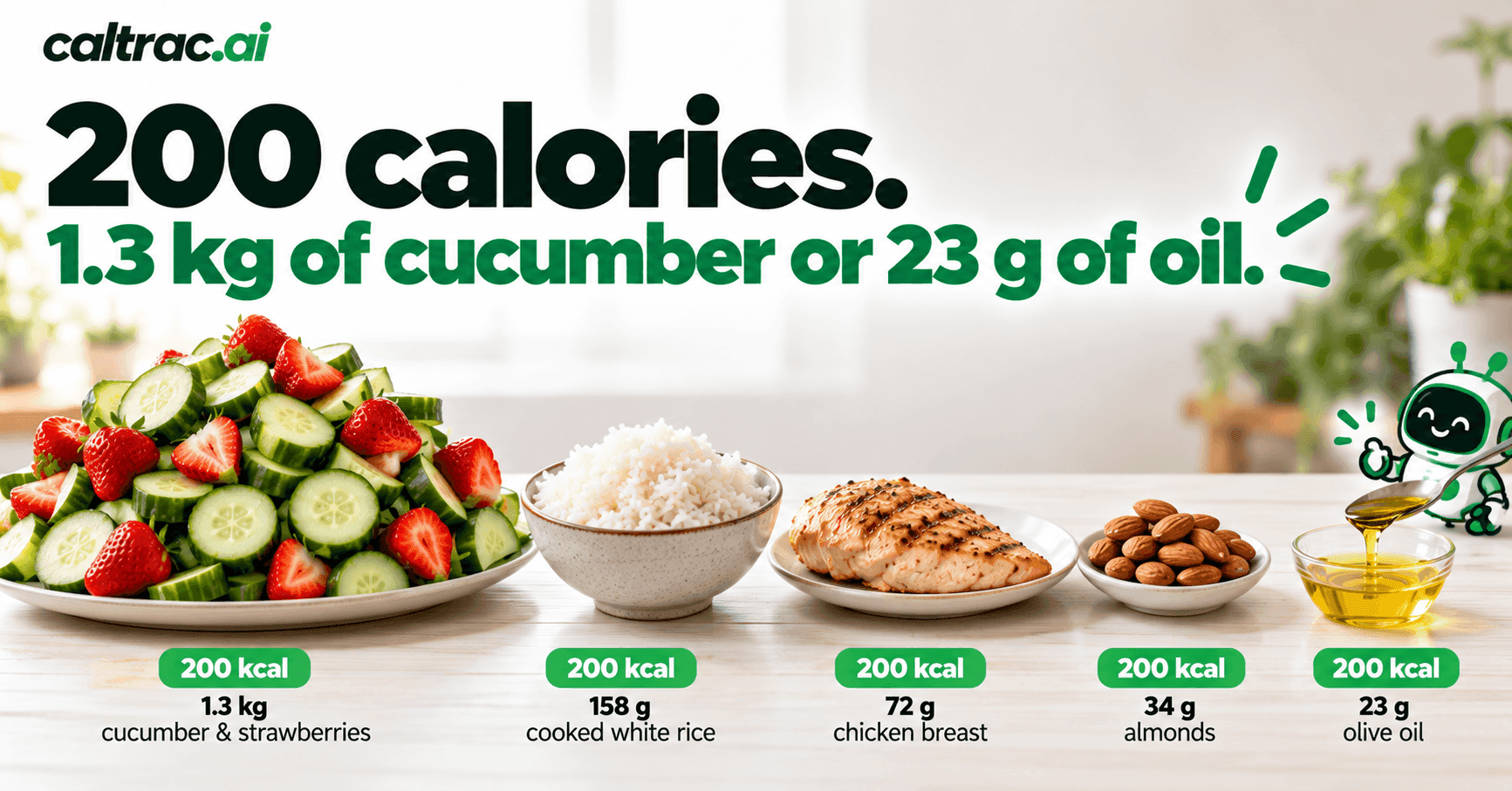
Two hundred calories is the size of a snack, a side, a coffee-shop treat or the gap between a diet that works and one that does not. It is also the amount most people misjudge by the widest margin, because at 200 calories the difference between foods is not a few bites but a whole plate: 200 calories is 1.3 kg of cucumber, 385 g of apple, 121 g of chicken breast, 35 g of almonds or 23 g of olive oil. This article shows 50 foods at exactly 200 calories, by weight, from USDA data, and explains why the ones that weigh more are the ones that keep you full.
Our companion piece covers what 500 calories looks like as whole meals. This one is about the snack and the side, which is where most unplanned calories live.
Why 200 Calories Is the Number That Matters
The gap between maintaining and gaining weight is small. In a four-week inpatient trial, adults eating freely from an ultra-processed menu consumed about 500 more calories a day than the same people on an unprocessed menu, and the difference showed up in weight within two weeks [1]; the cause was not hunger but energy density and eating speed [2]. Most of those extra calories arrived in snack-sized portions.
Energy density, the calories per gram of a food, is the single factor that decides how much of it you can eat before 200 calories runs out. People eat a fairly constant weight of food from day to day, so lowering the energy density of what is on the plate lowers intake without adding hunger [3]. In a year-long trial, women taught to eat lower-energy-density food, mainly by adding fruit and vegetables, lost more weight than women simply told to cut fat, and reported less hunger while doing it [4]. Eating rate works the same way: slower eating reduces intake in a meta-analysis of 22 studies [5], and the foods that weigh the most at 200 calories are also the slowest to eat.
Two further rules apply. Protein is the most filling macronutrient per calorie, and 25 to 30 g at a meal is the dose that suppresses appetite [6]. Liquids are the least filling: when people added 450 calories a day as a sugary drink, they did not compensate and gained weight, while the same calories as solid jelly beans were offset by eating less elsewhere [7].
200 Calories of Vegetables and Fruit
Weights are grams of the food as eaten, calculated from USDA energy values per 100 g.
| Food | Weight for 200 kcal | What that looks like |
|---|---|---|
| Cucumber [8] | 1,333 g | 4 to 5 whole cucumbers |
| Spinach, raw [9] | 870 g | Nine supermarket bags |
| Strawberries [10] | 625 g | About 40 strawberries |
| Broccoli [11] | 588 g | Two large heads |
| Carrots [12] | 488 g | 7 to 8 medium carrots |
| Orange [13] | 435 g | 3 medium oranges |
| Apple [14] | 385 g | 2 medium apples |
| Blueberries [15] | 351 g | 2.3 cups |
| Mango [16] | 333 g | 1 large mango, with 46 g of sugar |
| Banana [17] | 225 g | 2 medium bananas |
| Sweet potato, baked [18] | 222 g | 1 large |
| Potato, baked with skin [19] | 215 g | 1 medium |
| Avocado [20] | 125 g | Just under one whole fruit |
Nothing in the top half of this table can realistically be over-eaten. A kilogram of cucumber or 600 g of strawberries fills a stomach long before it fills a calorie budget, which is the whole point of eating them first [3]. Avocado is the exception: it is a fruit by botany and a fat by nutrition.
200 Calories of Protein Foods
| Food | Weight for 200 kcal | Protein in that portion |
|---|---|---|
| Egg whites [21] | 385 g | 42 g (about 12 whites) |
| Greek yogurt, nonfat [22] | 370 g | 35 g |
| Cottage cheese, 2% [23] | 247 g | 26 g |
| Shrimp, cooked [24] | 202 g | 48 g |
| Turkey breast, deli [25] | 183 g | 40 g |
| Lentils, cooked [26] | 172 g | 15 g, plus 14 g fibre |
| Edamame [27] | 165 g | 20 g |
| Tuna, canned in water [28] | 156 g | 37 g |
| Tofu, firm [29] | 139 g | 24 g |
| Dal, as prepared [30] | 138 g | 12 g |
| Hard-boiled eggs [31] | 129 g | 16 g (2.5 eggs) |
| Chicken breast, roasted [32] | 121 g | 38 g |
| Salmon, cooked [33] | 97 g | 21 g |
| Mozzarella, part skim [34] | 79 g | 19 g |
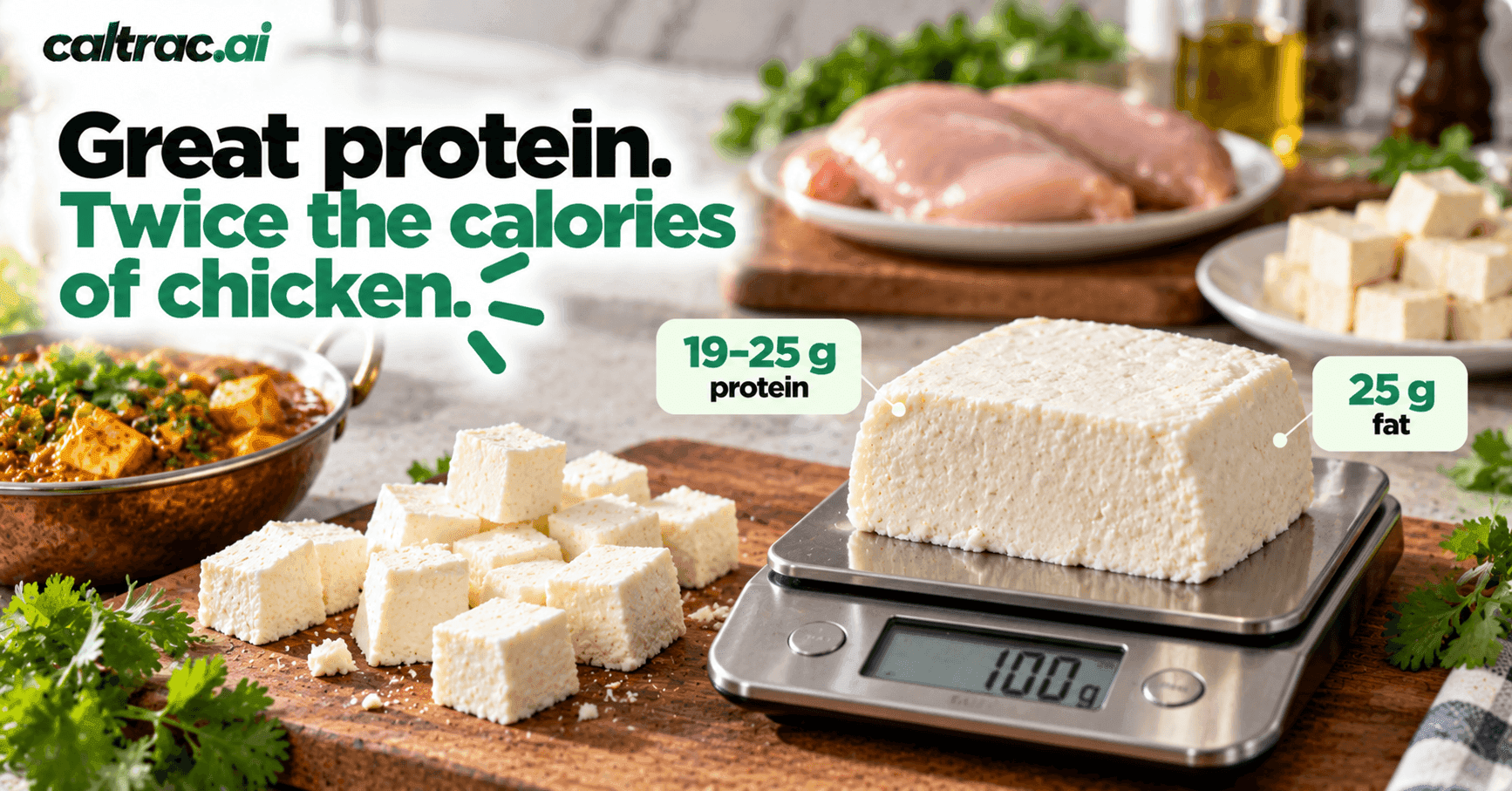
| Paneer [35] | 62 g | 16 g |
| Beef jerky [36] | 49 g | 16 g, with 870 mg sodium |
Shrimp, egg whites, turkey and chicken breast deliver 38 to 48 g of protein for 200 calories, more than the 25 to 30 g that research puts at the appetite-suppressing threshold [6]. Paneer and jerky deliver the same protein as two and a half eggs for a third of the weight, which is why they are easy to over-eat and worth weighing.
200 Calories of Grains, Breads and Starches
| Food | Weight for 200 kcal | What that looks like |
|---|---|---|
| Rice, white, cooked [37] | 154 g | One cup, slightly under |
| Pasta, cooked [38] | 127 g | About 1 cup |
| Whole-wheat bread [39] | 79 g | 2.6 slices |
| Roti [40] | 67 g | 1.7 medium rotis |
| Whole-wheat tortilla [41] | 65 g | 1.4 medium tortillas |
| Oats, dry [42] | 53 g | Two-thirds of a cup before cooking |
| Popcorn, air-popped [43] | 52 g | 6.5 cups |
| Rice cakes [44] | 51 g | 17 cakes |
Cooked grains carry water, so 200 calories of rice or pasta is a reasonable plateful. Dry grains do not: 200 calories of oats is a small handful until it absorbs milk, and 200 calories of rice cakes is seventeen of them, which is why "light" snacks rarely are. Popcorn is the standout, 6.5 cups for 200 calories with 7.5 g of fibre, as long as nothing is poured on it.
200 Calories of Fats, Nuts and Spreads
| Food | Weight for 200 kcal | What that looks like |
|---|---|---|
| Hummus [45] | 84 g | About 5 tablespoons |
| Almonds [46] | 35 g | About 28 almonds |
| Peanut butter [47] | 33 g | 2 level tablespoons |
| Dark chocolate, 70 to 85% [48] | 33 g | A third of a 100 g bar |
| Butter [49] | 28 g | 2 tablespoons |
| Olive oil [50] | 23 g | 1.7 tablespoons |
This table is where tracking fails most often, because none of these foods looks like 200 calories. Two tablespoons of peanut butter is the most under-estimated portion in the kitchen; a "drizzle" of olive oil over a salad is usually a tablespoon and a half. Nuts and hummus earn their place through protein and fibre; the oil and butter are pure energy, and measuring them by the spoon rather than the pour is the single most effective habit on this page.
200 Calories of Snacks, Treats and Fast Food
| Food | Weight for 200 kcal | What that looks like |
|---|---|---|
| Ice cream, vanilla [51] | 97 g | Two small scoops |
| French fries [52] | 69 g | Half a medium order |
| Samosa [53] | 65 g | Two-thirds of one |
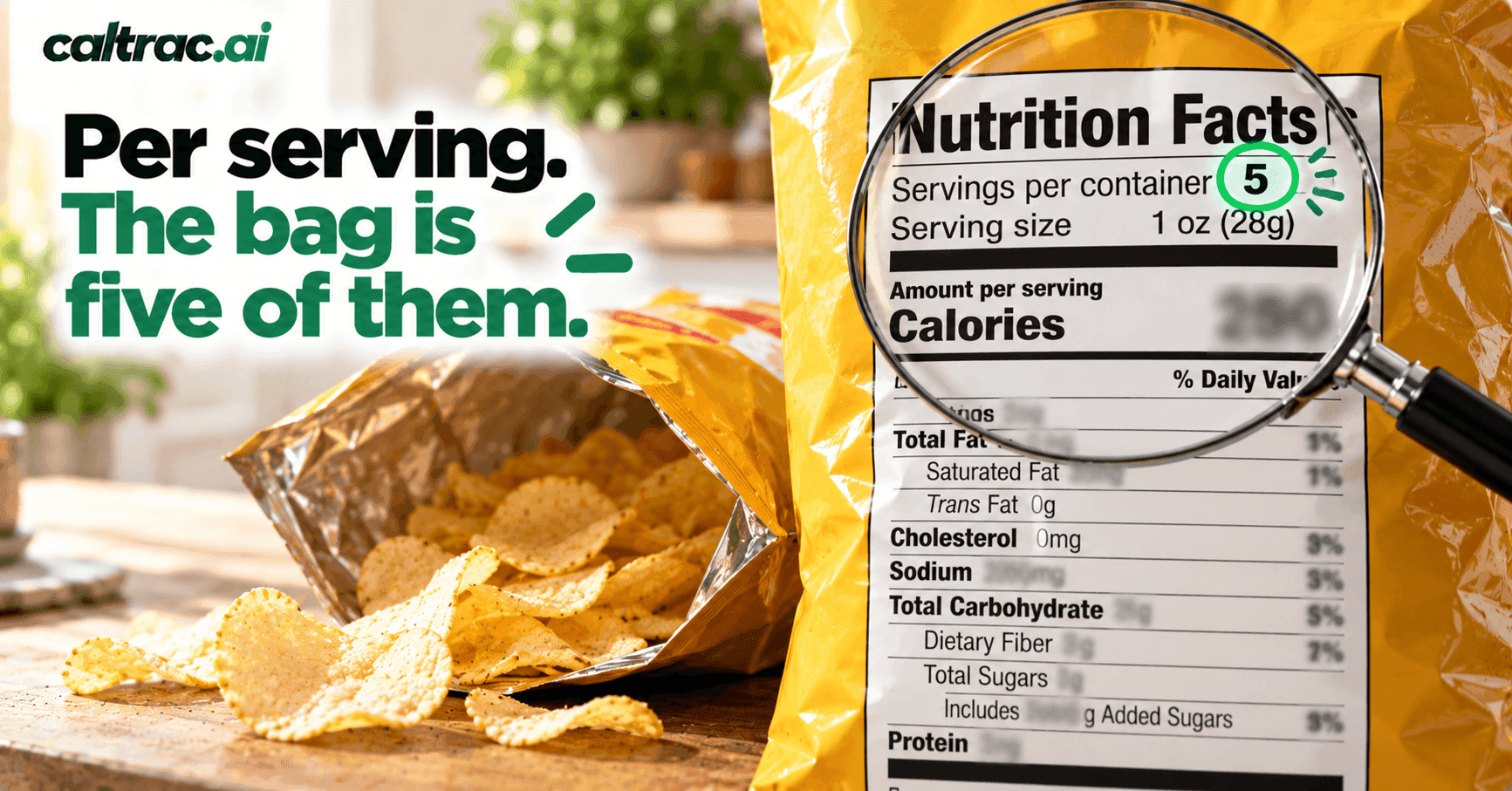
| Potato chips [54] | 38 g | A small single-serve bag |
| Milk chocolate [55] | 37 g | Eight squares |
Compare these with the first table: 200 calories is 38 g of chips or 625 g of strawberries, a sixteen-fold difference in weight for the same energy. Neither is forbidden; the point is to know which one you are choosing.
200 Calories of Drinks
| Drink | Volume for 200 kcal | What that looks like |
|---|---|---|
| Regular cola [56] | 476 ml | 1.4 cans |
| Beer, regular [57] | 465 ml | A pint, slightly under |
| Chai with milk and sugar [58] | 392 ml | 1.6 cups |
| Red wine [59] | 235 ml | 1.6 standard glasses |
Drinks are the weakest 200 calories you can spend, because the body barely registers them: liquid calories were not compensated for in the controlled trial above, while solid calories largely were [7]. A can and a half of cola is the energy of two apples with none of the fullness.
How to Use This
- Eat the heavy end of the table first. Vegetables and fruit, then protein, then grains, then fats. The weight fills you; the order protects the budget [3] [4].
- Snack at 200 calories with 10 g or more of protein. Greek yogurt, cottage cheese, edamame, eggs, tuna, turkey or a measured handful of almonds. A snack with no protein is a snack that leads to the next one [6].
- Weigh the fats. The 23 to 35 g portions of oil, butter, nuts and peanut butter are where a 500 kcal deficit quietly becomes a 200 kcal one [60].
- Treat drinks as food. If it has calories, it goes on the tally; if it does not fill you, it probably should not be there often [7].
- Add fibre. Fibre intake predicted weight loss and adherence better than anything else in a six-month trial [61]; the fruit, vegetable, lentil and popcorn rows carry the most of it.
A 200 kcal snack is 10 to 12% of a 1,600 to 1,900 kcal day. Find your own target with the calorie calculator, then decide how many of these portions a day fits inside it.
That is where tracking earns its keep. Two tablespoons of peanut butter and 600 g of strawberries are both 200 calories and look nothing alike, and the only way to know which one you ate is to log it. Snap a photo of the snack or type "2 tbsp peanut butter" and track it automatically with Caltrac. You will see the calories, the protein and the fibre, and your Apple Health-powered net calorie count shows what the snack did to the day. Know the weight; let the app keep the count.
Frequently Asked Questions
What does 200 calories look like? About 1.3 kg of cucumber, 385 g of apple, 370 g of nonfat Greek yogurt, 121 g of chicken breast, 154 g of cooked rice, 35 g of almonds, 33 g of peanut butter or 23 g of olive oil, all from USDA data [8] [14] [22] [32] [37] [46] [47] [50].
Is a 200-calorie snack good for weight loss? Yes, if it fits your target and carries protein or fibre. Protein at 25 to 30 g per eating occasion suppresses appetite [6], and lower energy density reduces intake without hunger [3].
What is the most filling 200-calorie food? By volume, vegetables and fruit: 200 calories is 600 g of strawberries or two large heads of broccoli. By protein, shrimp, egg whites, turkey and chicken breast at 38 to 48 g per 200 kcal [24] [21] [25] [32].
How many almonds is 200 calories? About 28, or 35 g [46]. A "handful" is often 50 g and 290 kcal.
How much peanut butter is 200 calories? About 33 g, two level tablespoons [47]. Heaped spoons roughly double it.
Do liquid calories count the same? On the scale, yes; in your appetite, no. People given 450 kcal a day as a sugary drink did not eat less to compensate and gained weight, while the same calories as solid food were largely offset [7].
References
- Hall KD, et al. Ultra-Processed Diets Cause Excess Calorie Intake and Weight Gain: An Inpatient Randomized Controlled Trial of Ad Libitum Food Intake. Cell Metabolism. 2019;30(1):67-77. pubmed.ncbi.nlm.nih.gov
- Forde CG, Mars M, de Graaf K. Ultra-Processing or Oral Processing? A Role for Energy Density and Eating Rate in Moderating Energy Intake from Processed Foods. Current Developments in Nutrition. 2020;4(3):nzaa019. pubmed.ncbi.nlm.nih.gov
- Rolls BJ. The relationship between dietary energy density and energy intake. Physiology & Behavior. 2009;97(5):609-615. pubmed.ncbi.nlm.nih.gov
- Ello-Martin JA, Roe LS, Ledikwe JH, Beach AM, Rolls BJ. Dietary energy density in the treatment of obesity: a year-long trial comparing 2 weight-loss diets. American Journal of Clinical Nutrition. 2007;85(6):1465-1477. pubmed.ncbi.nlm.nih.gov
- Robinson E, et al. A systematic review and meta-analysis examining the effect of eating rate on energy intake and hunger. American Journal of Clinical Nutrition. 2014;100(1):123-151. pubmed.ncbi.nlm.nih.gov
- Leidy HJ, et al. The role of protein in weight loss and maintenance. American Journal of Clinical Nutrition. 2015;101(6):1320S-1329S. pubmed.ncbi.nlm.nih.gov
- DiMeglio DP, Mattes RD. Liquid versus solid carbohydrate: effects on food intake and body weight. International Journal of Obesity. 2000;24(6):794-800. pubmed.ncbi.nlm.nih.gov
- USDA FoodData Central. Cucumber, with peel, raw: 15 kcal per 100 g. SR Legacy 168409. fdc.nal.usda.gov
- USDA FoodData Central. Spinach, raw: 23 kcal, 2.9 g protein per 100 g. SR Legacy 168462. fdc.nal.usda.gov
- USDA FoodData Central. Strawberries, raw: 32 kcal, 2.0 g fibre per 100 g. SR Legacy 167762. fdc.nal.usda.gov
- USDA FoodData Central. Broccoli, raw: 34 kcal, 2.6 g fibre per 100 g. SR Legacy 170379. fdc.nal.usda.gov
- USDA FoodData Central. Carrots, raw: 41 kcal, 2.8 g fibre per 100 g. SR Legacy 170393. fdc.nal.usda.gov
- USDA FoodData Central. Oranges, raw, Florida: 46 kcal per 100 g. SR Legacy 169918. fdc.nal.usda.gov
- USDA FoodData Central. Apples, raw, with skin: 52 kcal, 2.4 g fibre per 100 g. SR Legacy 171688. fdc.nal.usda.gov
- USDA FoodData Central. Blueberries, raw: 57 kcal, 2.4 g fibre per 100 g. SR Legacy 171711. fdc.nal.usda.gov
- USDA FoodData Central. Mangos, raw: 60 kcal, 13.7 g sugar per 100 g. SR Legacy 169910. fdc.nal.usda.gov
- USDA FoodData Central. Bananas, raw: 89 kcal, 2.6 g fibre per 100 g. SR Legacy 173944. fdc.nal.usda.gov
- USDA FoodData Central. Sweet potato, baked in skin: 90 kcal, 3.3 g fibre per 100 g. SR Legacy 170134. fdc.nal.usda.gov
- USDA FoodData Central. Potatoes, baked, flesh and skin: 93 kcal, 2.2 g fibre per 100 g. SR Legacy 170093. fdc.nal.usda.gov
- USDA FoodData Central. Avocados, raw, all commercial varieties: 160 kcal, 6.7 g fibre per 100 g. SR Legacy 171705. fdc.nal.usda.gov
- USDA FoodData Central. Egg, white, raw: 52 kcal, 10.9 g protein per 100 g. SR Legacy 172183. fdc.nal.usda.gov
- USDA FoodData Central. Yogurt, Greek, nonfat, plain: 54 kcal, 9.5 g protein per 100 g. SR Legacy 171312. fdc.nal.usda.gov
- USDA FoodData Central. Cheese, cottage, 2% milkfat: 81 kcal, 10.4 g protein per 100 g. SR Legacy 172182. fdc.nal.usda.gov
- USDA FoodData Central. Crustaceans, shrimp, cooked: 99 kcal, 24 g protein per 100 g. SR Legacy 175180. fdc.nal.usda.gov
- USDA FoodData Central. Turkey breast, low salt, deli luncheon meat: 109 kcal, 21.8 g protein per 100 g. SR Legacy 174572. fdc.nal.usda.gov
- USDA FoodData Central. Lentils, cooked: 116 kcal, 9 g protein, 7.9 g fibre per 100 g. SR Legacy 172421. fdc.nal.usda.gov
- USDA FoodData Central. Edamame, frozen, prepared: 121 kcal, 11.9 g protein, 5.2 g fibre per 100 g. SR Legacy 168411. fdc.nal.usda.gov
- USDA FoodData Central. Tuna, white, canned in water, drained: 128 kcal, 23.6 g protein per 100 g. SR Legacy 175158. fdc.nal.usda.gov
- USDA FoodData Central. Tofu, firm: 144 kcal, 17.3 g protein per 100 g. SR Legacy 172475. fdc.nal.usda.gov
- USDA FoodData Central, FNDDS. Dal (as prepared): 145 kcal, 8.6 g protein per 100 g; 1 cup 240 g. FDC ID 2707427. fdc.nal.usda.gov
- USDA FoodData Central. Egg, whole, hard-boiled: 155 kcal, 12.6 g protein per 100 g; 1 large 50 g. SR Legacy 173424. fdc.nal.usda.gov
- USDA FoodData Central. Chicken breast, meat only, roasted: 165 kcal, 31 g protein per 100 g. SR Legacy 171477. fdc.nal.usda.gov
- USDA FoodData Central. Salmon, Atlantic, farmed, cooked: 206 kcal, 22.1 g protein per 100 g. SR Legacy 175168. fdc.nal.usda.gov
- USDA FoodData Central. Cheese, mozzarella, part skim: 254 kcal, 24.3 g protein per 100 g. SR Legacy 170847. fdc.nal.usda.gov
- USDA FoodData Central, Branded. Karoun Dairies Paneer: 321 kcal, 25 g protein per 100 g. FDC ID 2429587. fdc.nal.usda.gov
- USDA FoodData Central, FNDDS. Beef jerky: 410 kcal, 33.2 g protein, 1,785 mg sodium per 100 g. FDC ID 2705860. fdc.nal.usda.gov
- USDA FoodData Central. Rice, white, long-grain, cooked: 130 kcal per 100 g. SR Legacy 168878. fdc.nal.usda.gov
- USDA FoodData Central. Pasta, cooked, enriched: 158 kcal per 100 g. SR Legacy 169737. fdc.nal.usda.gov
- USDA FoodData Central. Bread, whole-wheat: 252 kcal per 100 g; 1 slice about 30 g. SR Legacy 172688. fdc.nal.usda.gov
- USDA FoodData Central, FNDDS. Bread, chapatti or roti: 299 kcal per 100 g; 1 medium 40 g. FDC ID 2707713. fdc.nal.usda.gov
- USDA FoodData Central, FNDDS. Tortilla, whole wheat: 310 kcal, 9.8 g fibre per 100 g; 1 medium 45 g. FDC ID 2707825. fdc.nal.usda.gov
- USDA FoodData Central. Cereals, oats, dry: 379 kcal, 10.1 g fibre per 100 g. SR Legacy 173904. fdc.nal.usda.gov
- USDA FoodData Central. Snacks, popcorn, air-popped: 387 kcal, 14.5 g fibre per 100 g; 1 cup popped 8 g. SR Legacy 167959. fdc.nal.usda.gov
- USDA FoodData Central, FNDDS. Rice cake: 392 kcal per 100 g; 1 cake 3 g. FDC ID 2708162. fdc.nal.usda.gov
- USDA FoodData Central. Hummus, commercial: 237 kcal, 7.8 g protein, 5.5 g fibre per 100 g. SR Legacy 174289. fdc.nal.usda.gov
- USDA FoodData Central. Nuts, almonds: 579 kcal, 21.2 g protein, 12.5 g fibre per 100 g. SR Legacy 170567. fdc.nal.usda.gov
- USDA FoodData Central. Peanut butter, smooth: 598 kcal, 22.2 g protein per 100 g. SR Legacy 172470. fdc.nal.usda.gov
- USDA FoodData Central. Chocolate, dark, 70-85% cacao solids: 598 kcal, 10.9 g fibre per 100 g. SR Legacy 170273. fdc.nal.usda.gov
- USDA FoodData Central. Butter, salted: 717 kcal per 100 g; 1 tablespoon 14.2 g. SR Legacy 173410. fdc.nal.usda.gov
- USDA FoodData Central. Oil, olive: 884 kcal per 100 g; 1 tablespoon 13.5 g. SR Legacy 171413. fdc.nal.usda.gov
- USDA FoodData Central. Ice creams, vanilla: 207 kcal per 100 g. SR Legacy 167575. fdc.nal.usda.gov
- USDA FoodData Central, FNDDS. Potato, french fries, restaurant: 289 kcal per 100 g; 1 medium fast-food order 145 g. FDC ID 2709462. fdc.nal.usda.gov
- USDA FoodData Central, FNDDS. Samosa: 310 kcal per 100 g; 1 regular 100 g. FDC ID 2708730. fdc.nal.usda.gov
- USDA FoodData Central. Snacks, potato chips, plain, salted: 532 kcal per 100 g. SR Legacy 169677. fdc.nal.usda.gov
- USDA FoodData Central. Candies, milk chocolate: 535 kcal per 100 g. SR Legacy 167587. fdc.nal.usda.gov
- USDA FoodData Central. Beverages, carbonated, cola, regular: 42 kcal per 100 g. SR Legacy 174852. fdc.nal.usda.gov
- USDA FoodData Central. Beer, regular: 43 kcal per 100 g. SR Legacy 168746. fdc.nal.usda.gov
- USDA FoodData Central, FNDDS. Tea, hot, with milk: 51 kcal, 8.7 g sugar per 100 g; 1 cup 240 g. FDC ID 2710506. fdc.nal.usda.gov
- USDA FoodData Central. Wine, table, red: 85 kcal per 100 g. SR Legacy 173190. fdc.nal.usda.gov
- Jensen MD, et al. 2013 AHA/ACC/TOS guideline for the management of overweight and obesity in adults. Circulation. 2014;129(25 Suppl 2):S102-S138. pubmed.ncbi.nlm.nih.gov
- Miketinas DC, et al. Fiber Intake Predicts Weight Loss and Dietary Adherence in Adults Consuming Calorie-Restricted Diets: The POUNDS Lost Study. Journal of Nutrition. 2019;149(10):1742-1748. pubmed.ncbi.nlm.nih.gov