


"Ultra-processed" has become the most important and most misused phrase in nutrition. It is important because the evidence linking these foods to overeating and disease has become hard to argue with. It is misused because people apply it to anything in a packet, which makes plain yogurt, frozen peas and tinned beans sound like crisps. This article explains what the term actually means, which everyday foods fall into each group, what the trials show, and how to cut ultra-processed intake without turning dinner into a research project.
What "Ultra-Processed" Means
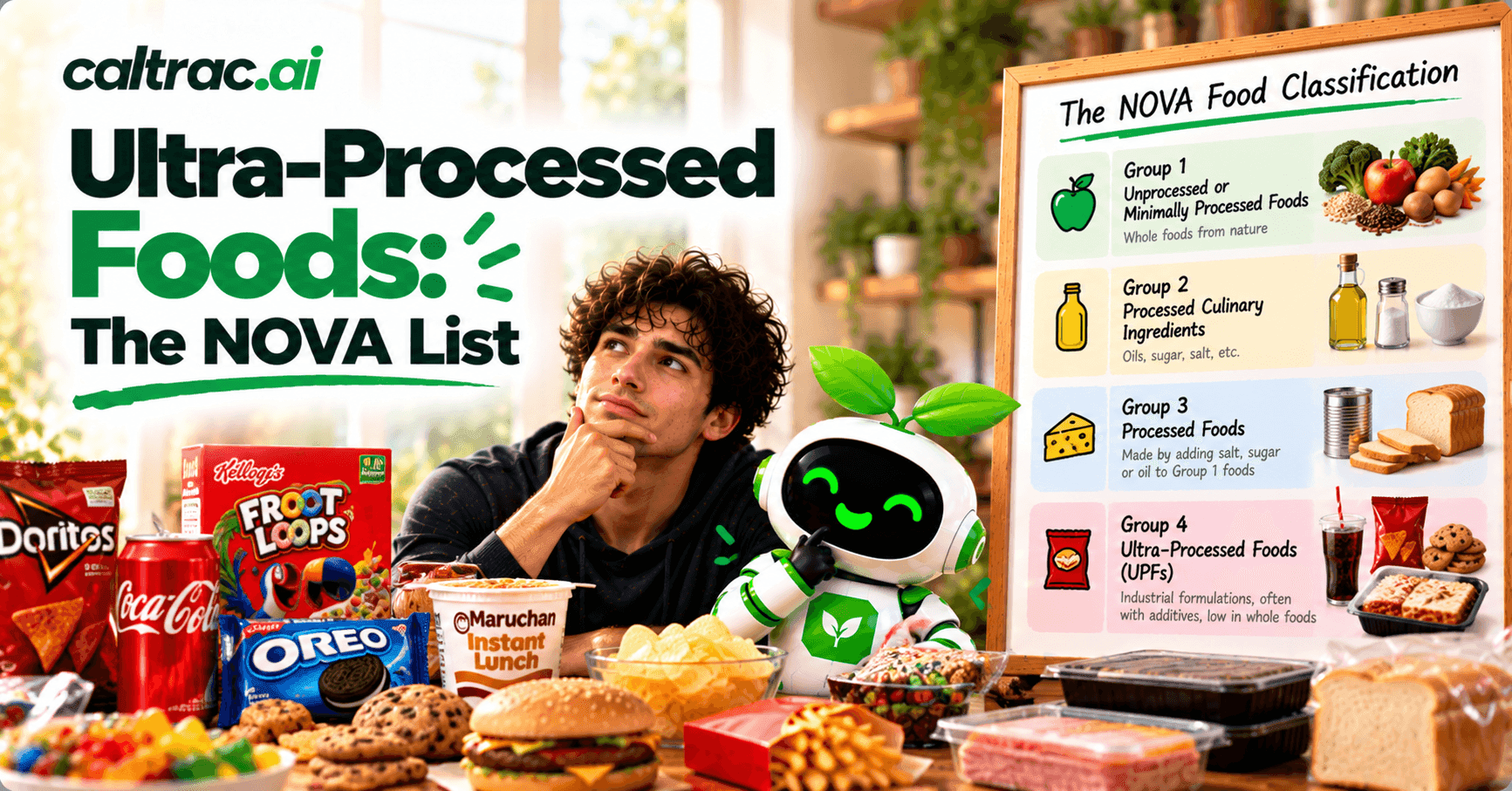
The term comes from NOVA, a classification system developed by Carlos Monteiro's group at the University of São Paulo that sorts food by the extent and purpose of its processing rather than by its nutrients [1]. There are four groups:
| NOVA group | What it is | Examples |
|---|---|---|
| 1. Unprocessed or minimally processed | Whole foods, or foods altered only by cleaning, drying, freezing, pasteurising, grinding | Fresh and frozen vegetables, fruit, meat, fish, eggs, milk, plain yogurt, rice, dal, oats, flour, nuts |
| 2. Processed culinary ingredients | Substances extracted from group 1 foods, used in cooking | Oil, ghee, butter, sugar, salt, honey |
| 3. Processed foods | Group 1 foods with group 2 ingredients added, mostly to preserve | Tinned beans and vegetables, fresh bread from a bakery, cheese, salted nuts, cured meat, tinned fish |
| 4. Ultra-processed foods | Industrial formulations made mostly from substances extracted or synthesised from foods, with additives | Packaged breads and buns, breakfast cereals, flavoured yogurts, soft drinks, sausages and nuggets, instant noodles, confectionery, most snack foods, "diet" products |
Examples are drawn from the FAO's 2019 NOVA report, which lists plain yogurt, milk and oat flakes in group 1, bakery bread and cheese in group 3, and breakfast cereals, fruit yogurts, mass-produced packaged breads and sausages in group 4 [2].
The practical rule from the NOVA authors is the ingredient list. A food is ultra-processed if its list contains substances you would never find in a home kitchen: hydrolysed proteins, maltodextrin, high-fructose corn syrup, modified starches, protein isolates, and cosmetic additives such as flavours, colours, emulsifiers, thickeners and sweeteners [1]. Plain corn flakes are minimally processed; add flavouring or colour and they become ultra-processed [1]. The processing itself is not the problem. The purpose of it is: ultra-processed foods are designed to be convenient, durable, cheap and very easy to eat a lot of.
How Much of the Diet It Is
In the United States, ultra-processed foods supply about 58% of all calories and 89% of added sugars [3] [4]. In the national survey analysed, adults in the highest fifth of ultra-processed intake had a BMI 1.6 units higher and a waist 4 cm larger than those in the lowest fifth, with 53% higher odds of obesity [3].
What the Research Shows
The trial that settled the overeating question
Twenty adults lived in an NIH metabolic ward for four weeks and were offered either an ultra-processed or an unprocessed diet for two weeks each, in random order, matched for calories, sugar, fat, fibre and sodium on offer, and told to eat as much or as little as they liked. On the ultra-processed diet they ate 508 more calories a day and gained 0.9 kg in two weeks; on the unprocessed diet they lost 0.9 kg [5]. Same nutrients available, same people, opposite outcomes.
A follow-up analysis of that trial identified the mechanism: eating rate. Participants consumed the ultra-processed diet at 48 kcal per minute against 31 kcal per minute for the unprocessed diet, more than 50% faster, and across 327 foods eating rate rose steadily from unprocessed to processed to ultra-processed [6]. Soft, energy-dense, low-fibre foods go down fast, and intake is governed by how much you eat before fullness signals arrive [7]. A separate analysis of 98 ready-to-eat foods found that the more processed a food, the lower its satiety potential and the higher its glycaemic response [8].
The population evidence
An umbrella review of 45 pooled analyses covering 9.9 million people found ultra-processed intake associated with 32 of 45 health outcomes examined. The strongest evidence was for cardiovascular mortality (50% higher risk), type 2 diabetes (12% higher per unit of intake) and anxiety and common mental disorders (about 50% higher odds); the evidence for obesity (55% higher odds), all-cause mortality (21% higher) and depression was rated highly suggestive [9]. An earlier meta-analysis of 23 studies found the highest consumers had 39% higher odds of overweight or obesity and 25% higher all-cause mortality [10]. Observational studies cannot prove cause on their own, but combined with the ward trial, the direction is not in doubt.
Policy has caught up
In January 2026 the US Dietary Guidelines for the first time told Americans to "limit highly processed foods, added sugars and refined carbohydrates," to "avoid highly processed packaged, prepared, ready-to-eat, or other foods that are salty or sweet, such as chips, cookies, and candy," and to significantly reduce refined carbohydrates such as white bread and packaged breakfast options [11].
Why It Matters for Weight Loss Specifically
Two reasons, and neither is "chemicals."
Energy density. People eat a roughly consistent weight of food, so the calories per gram of what is on the plate largely decide intake [12]. Ultra-processed foods are dry, fatty and sugary by design: potato chips are 532 kcal per 100 g [13], fried gram-flour snacks 580 [14], against 54 for plain Greek yogurt [15]. The 500-calorie gap in the ward trial is what energy density looks like when eating is unrestricted.
Eating rate. Fifty percent faster eating [6] means fifty percent more food before satiety catches up. This is why a bowl of oats and a bowl of sugary cereal with identical calories produce different lunches.
What Ultra-Processed Is Not
The word has started to swallow things it should not.
- Protein powder, soya chunks and tofu are processed. Soya chunks are a single ingredient, defatted soy [16]; tofu is soybeans, water and a coagulant. They are not ultra-processed in the NOVA sense unless flavours and additives are added, and they are among the best weight-loss foods available.
- Frozen vegetables, tinned beans, plain yogurt, cheese and oats are groups 1 to 3 [2]. Avoiding them because they come in packaging removes the convenient foods that make a healthy diet sustainable.
- Beef jerky is instructive: a plain whole-muscle jerky is a processed (group 3) cured meat, while a flavoured one carrying maltodextrin, monosodium glutamate and sodium nitrite is ultra-processed [17]. The ingredient list, not the category of food, decides.
- Healthy-sounding ultra-processed foods are still ultra-processed: protein bars, flavoured yogurts, "high-fibre" cereals, plant-based meats and diet soft drinks mostly sit in group 4. Some are useful tools. They are not whole food.
A Practical Way to Cut Ultra-Processed Intake
You do not need to reach zero. The ward trial compared a diet that was 80% ultra-processed by calories with one that was almost none [5]; most of the benefit comes from moving the big items.
- Fix breakfast. Packaged cereal and flavoured yogurt to oats [18] with plain yogurt [15] and fruit. This single swap moves the largest daily block of ultra-processed calories for most people.
- Replace snacks with foods that have one ingredient. Fruit, nuts, roasted chana, boiled eggs, plain yogurt. The eating-rate problem disappears when the food has structure.
- Read the list, not the front. Anything with five or more ingredients you could not buy separately is group 4 [1].
- Cook the carbohydrate. Rice, roti, potatoes and dal cooked at home are group 1 or 3; packaged bread, instant noodles and ready meals are group 4.
- Keep the useful tools, deliberately. A protein shake after training or a diet soft drink instead of a sugary one is a reasonable choice made on purpose; it is the unexamined default that does the damage.
- Watch energy density, which is what the label will not tell you. Calories per 100 g above 400 is a flag regardless of the ingredient list.
Where Calories Still Rule
Cutting ultra-processed food is one of the most effective ways to eat fewer calories without counting them, and the ward trial is the proof. It is not a substitute for a calorie target: a whole-food diet of nuts, cheese, ghee and rice can overshoot maintenance comfortably. Set the target with the calorie calculator, set protein with the macro calculator, and use the NOVA groups to decide what fills them. WHO's own healthy-diet guidance, limiting free sugars, saturated fat and salt and emphasising vegetables, fruit, legumes and whole grains [19], is in practice a description of groups 1 to 3.
That is where tracking earns its keep. Snap a photo of your meal or type what you ate and track it automatically with Caltrac. You will see the calories and protein, and over a week you will see the pattern the ingredient lists hide: which meals carry the density and the speed. Your Apple Health-powered net calorie count shows what the swaps are worth. Read the label once; let the app read the week.
Frequently Asked Questions
What are ultra-processed foods? Industrial formulations made largely from substances extracted or synthesised from foods, with additives such as flavours, colours, emulsifiers and sweeteners not used in home cooking [1]. Soft drinks, packaged snacks, breakfast cereals, flavoured yogurts and sausages are typical examples [2].
What is the difference between processed and ultra-processed food? Processed foods (NOVA group 3) are whole foods with salt, sugar or oil added, such as cheese, tinned beans or bakery bread. Ultra-processed foods (group 4) are formulations of extracted ingredients and additives [1] [2].
Do ultra-processed foods cause weight gain? In a controlled trial they caused people to eat 508 more calories a day and gain 0.9 kg in two weeks compared with an unprocessed diet matched for nutrients [5], largely because they are eaten 50% faster [6].
Is Greek yogurt ultra-processed? No. Plain yogurt is minimally processed (group 1); flavoured and fruit yogurts are typically ultra-processed [2].
Are soya chunks or tofu ultra-processed? Not in the NOVA sense when they are single-ingredient products [16]. They are processed, protein-dense foods; flavoured versions with additives would be group 4.
How much ultra-processed food is okay? There is no established threshold. US adults average 58% of calories from ultra-processed food [3]; the 2025 to 2030 Dietary Guidelines advise avoiding highly processed packaged salty and sweet foods and significantly reducing refined carbohydrates [11].
References
- Monteiro CA, et al. Ultra-processed foods: what they are and how to identify them. Public Health Nutrition. 2019;22(5):936-941. pubmed.ncbi.nlm.nih.gov
- Monteiro CA, Cannon G, Lawrence M, Costa Louzada ML, Pereira Machado P. Ultra-processed foods, diet quality, and health using the NOVA classification system. Rome: FAO, 2019. openknowledge.fao.org
- Juul F, Martinez-Steele E, Parekh N, Monteiro CA, Chang VW. Ultra-processed food consumption and excess weight among US adults. British Journal of Nutrition. 2018;120(1):90-100. pubmed.ncbi.nlm.nih.gov
- Martínez Steele E, et al. Ultra-processed foods and added sugars in the US diet: evidence from a nationally representative cross-sectional study. BMJ Open. 2016;6(3):e009892. pubmed.ncbi.nlm.nih.gov
- Hall KD, et al. Ultra-Processed Diets Cause Excess Calorie Intake and Weight Gain: An Inpatient Randomized Controlled Trial of Ad Libitum Food Intake. Cell Metabolism. 2019;30(1):67-77. pubmed.ncbi.nlm.nih.gov
- Forde CG, Mars M, de Graaf K. Ultra-Processing or Oral Processing? A Role for Energy Density and Eating Rate in Moderating Energy Intake from Processed Foods. Current Developments in Nutrition. 2020;4(3):nzaa019. pubmed.ncbi.nlm.nih.gov
- Robinson E, et al. A systematic review and meta-analysis examining the effect of eating rate on energy intake and hunger. American Journal of Clinical Nutrition. 2014;100(1):123-151. pubmed.ncbi.nlm.nih.gov
- Fardet A. Minimally processed foods are more satiating and less hyperglycemic than ultra-processed foods: a preliminary study with 98 ready-to-eat foods. Food & Function. 2016;7(5):2338-2346. pubmed.ncbi.nlm.nih.gov
- Lane MM, et al. Ultra-processed food exposure and adverse health outcomes: umbrella review of epidemiological meta-analyses. BMJ. 2024;384:e077310. pubmed.ncbi.nlm.nih.gov
- Pagliai G, et al. Consumption of ultra-processed foods and health status: a systematic review and meta-analysis. British Journal of Nutrition. 2021;125(3):308-318. pubmed.ncbi.nlm.nih.gov
- US Department of Health and Human Services and US Department of Agriculture. Dietary Guidelines for Americans, 2025-2030. January 2026. cdn.realfood.gov
- Rolls BJ. The relationship between dietary energy density and energy intake. Physiology & Behavior. 2009;97(5):609-615. pubmed.ncbi.nlm.nih.gov
- USDA FoodData Central. Snacks, potato chips, plain, salted: 532 kcal per 100 g. SR Legacy 169677. fdc.nal.usda.gov
- USDA FoodData Central, Branded. Haldiram's Plain Bhujia: 580 kcal, 44 g fat, 780 mg sodium per 100 g. FDC ID 904996. fdc.nal.usda.gov
- USDA FoodData Central. Yogurt, Greek, nonfat, plain: 54 kcal, 9.5 g protein per 100 g. SR Legacy 171312. fdc.nal.usda.gov
- Nutrela soya chunks pack label (ingredient: defatted soy; 52 g protein per 100 g), as reproduced in a retailer listing. thedesifood.com
- USDA FoodData Central, Branded. Jack Link's Premium Cuts Beef Jerky ingredient list (includes sodium nitrite, maltodextrin, monosodium glutamate). FDC ID 2011606. fdc.nal.usda.gov
- USDA FoodData Central. Cereals, oats, regular and quick, dry: 379 kcal, 10.1 g fibre per 100 g. SR Legacy 173904. fdc.nal.usda.gov
- World Health Organization. Healthy diet (fact sheet). who.int