When people compare calorie tracking apps, they argue about the AI: how fast the photo scan is, how clever the recognition looks. But the AI is only half the machine. Every scan, search, and text entry ultimately resolves against a nutrition database — the table of numbers that says what a banana, a chicken breast, or a slice of pizza actually contains. If that data is wrong, the smartest AI in the world just delivers the wrong answer faster. The quick verdict: verified databases beat crowdsourced ones, and it's why Caltrac grounds its estimations in the USDA database — the most rigorously maintained nutrition dataset in the world. Here's what that means and why it should change how you pick a tracker.
What is a nutrition database?
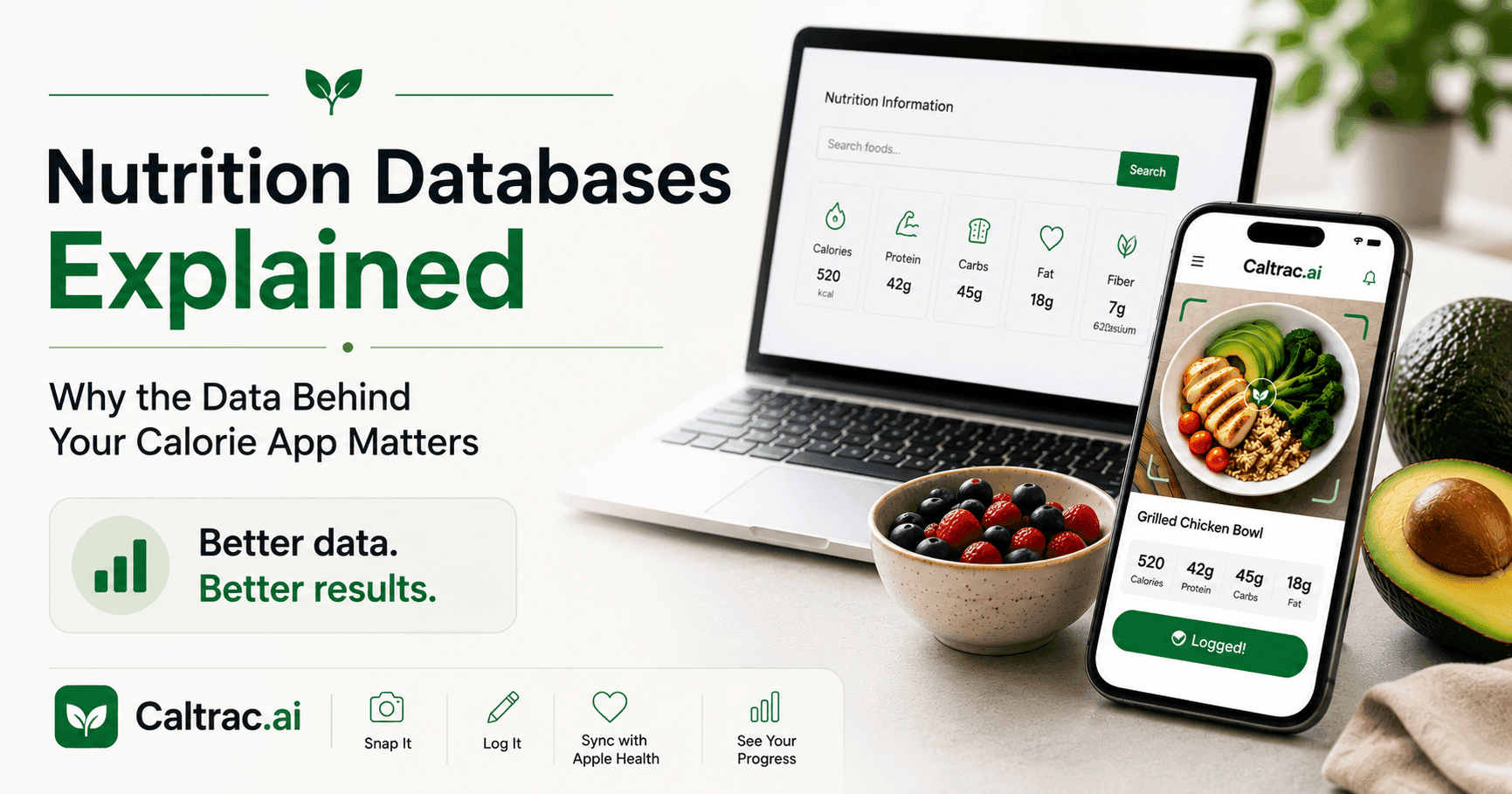
A nutrition database is a structured catalog of foods and their nutrient values — calories, protein, carbs, fat, and often dozens of micronutrients — per standardized serving. When your app identifies "grilled chicken breast, 150g," it doesn't calculate the nutrition from the photo; it looks the food up in its database and scales the values to your portion.
That lookup step is where accuracy is won or lost. The photo recognition can be flawless, but if the database entry behind it says a banana has 120 calories when it has 90, every log you make inherits that error — and small errors compound. A tracker that's consistently 15% off can be the difference between a real calorie deficit and a frustrating plateau you can't explain.
Crowdsourced vs. verified: the two kinds of nutrition database
Most tracking apps draw from one of two sources, and the difference is bigger than most users realize.
Crowdsourced databases
Some of the biggest apps built their food catalogs from user submissions — anyone can add an entry. The upside is scale: tens of millions of items, including obscure regional products. The downside is chaos. The same food often exists as dozens of conflicting entries with different calorie counts, wrong serving sizes, or missing macros. Independent reviews of the largest crowdsourced database have flagged exactly this: one entry for a banana might say 80 calories, another 120. The burden of figuring out which entry to trust lands on you — at every single meal.
Verified databases
Verified databases are curated from laboratory analysis and standardized data. The gold standard is USDA FoodData Central, maintained by the U.S. Department of Agriculture. Its core datasets are built on lab-analyzed foods with documented methodology, standardized serving definitions, and detailed nutrient profiles — not just calories and macros, but vitamins and minerals too. It's the reference that nutrition researchers, dietitians, and food scientists themselves rely on. One food, one authoritative answer.
Why the database matters more than the AI
Think of a photo-scanning app as a two-step pipeline: identify the food, then look up its nutrition. AI handles step one, the database handles step two — and step two is where your actual numbers come from.
- Consistency: with a verified database, "medium banana" means the same thing today, tomorrow, and next month. Your weekly trends become meaningful instead of noisy.
- Trustworthy totals: decisions like "can I fit a snack into today?" depend on your running total being right. Garbage entries make that total fiction.
- Less friction: when you don't have to second-guess and cross-check every entry, logging stays fast — and research on food journaling is clear that consistency is what drives results.
- Micronutrients that mean something: fiber, potassium, and vitamin values are only as good as their source. Lab-analyzed data makes them usable; guessed data makes them decoration.
How Caltrac uses the USDA database
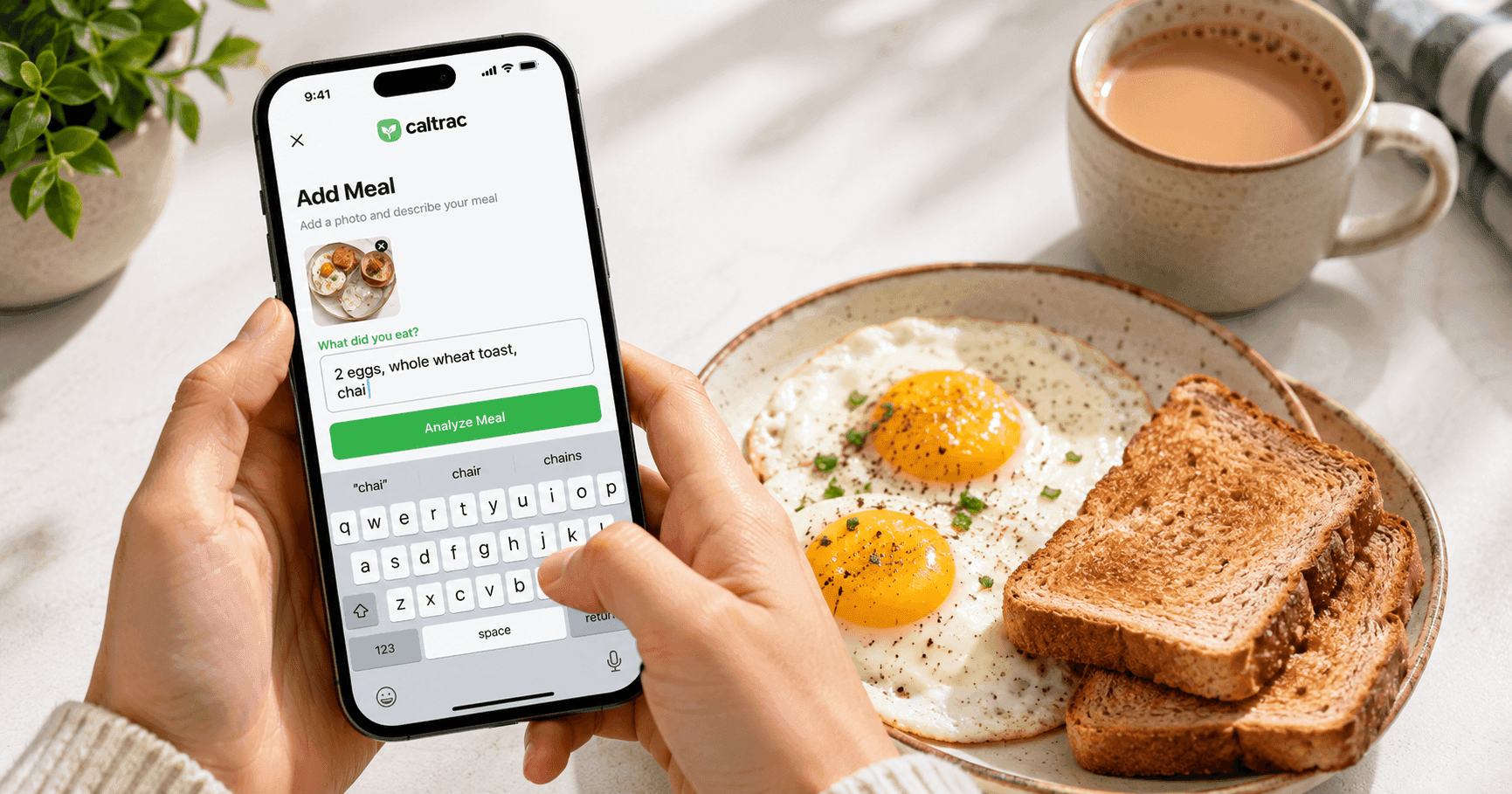
Caltrac pairs its AI with the strongest step two available: its calorie and macro estimations are grounded in USDA data. Snap a photo of your plate or type "two eggs and oatmeal," and the foods Caltrac identifies are matched against USDA-based nutrition values — the same reference data dietitians use — then scaled to your estimated portion.
The practical payoff:
- One banana, one answer. No scrolling through twelve conflicting user entries wondering which is real.
- Estimates you can act on. When Caltrac says your day is at 1,850 calories, that number is built on lab-grade source data, not a stranger's guess from 2014.
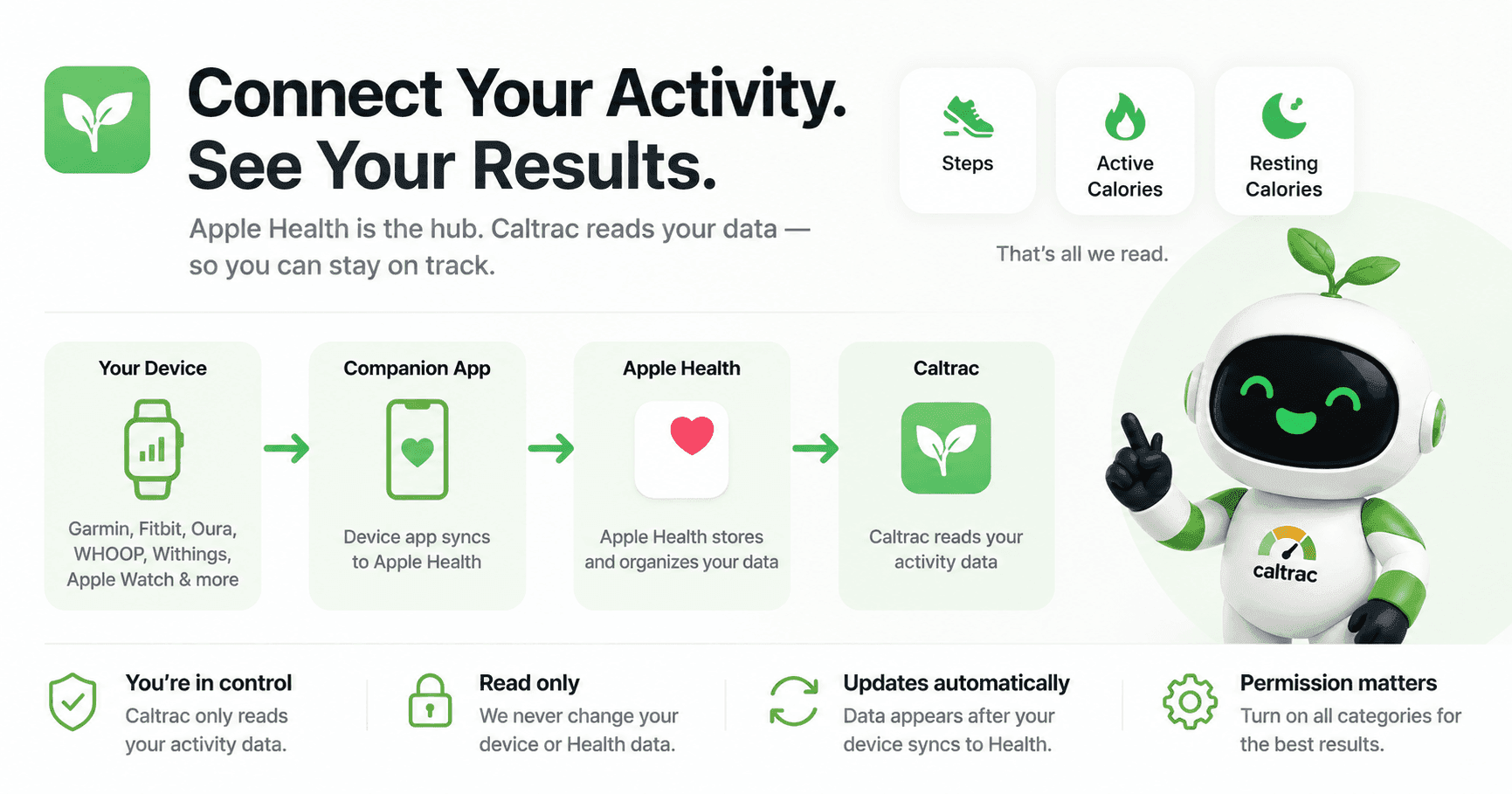
- Accuracy without the paywall. Some apps charge a subscription for "verified" data tiers. Caltrac's USDA-grounded logging — photo and text — is completely free, with no paywall, and your totals feed straight into your Apple Health-powered net calorie count.
AI recognition gets the food right; USDA data gets the numbers right. You need both, and you shouldn't have to pay extra for the second half. Get started with Caltrac free and see what USDA-backed logging looks like on your own meals.
Bottom line
A calorie tracker is a lookup machine wearing an AI costume — the nutrition database underneath decides whether your numbers are real. Crowdsourced catalogs offer scale but make you the fact-checker; verified sources like the USDA database offer one authoritative answer per food. Caltrac builds on USDA data so every photo and text log resolves to research-grade numbers, free, at every meal.
FAQ
What nutrition database do calorie counting apps use? It varies widely. Some rely on crowdsourced, user-submitted entries; others license commercial databases or build on public verified sources. Caltrac grounds its estimations in the USDA database — the U.S. Department of Agriculture's lab-analyzed reference data.
Why is the USDA database considered the gold standard? USDA FoodData Central is built on laboratory analysis with documented methodology and standardized servings, and it's maintained by scientists rather than anonymous submissions. It's the reference dataset used in nutrition research itself.
Are crowdsourced food databases inaccurate? Not uniformly — many entries are fine — but the same food frequently appears with conflicting calorie counts and serving sizes, and there's no easy way to tell good entries from bad. That inconsistency forces users to verify entries manually, which adds friction and errors over time.
Does a better database really change my results? Yes, cumulatively. A consistent 10–15% error in your logs can erase a planned calorie deficit without you ever knowing why. Reliable source data keeps your daily totals — and the trends you base decisions on — anchored to reality.