


GLP-1 medications have done something no diet ever managed: they make eating less feel easy. In the pivotal trials, semaglutide (Wegovy) produced 14.9% weight loss over 68 weeks and tirzepatide (Zepbound) 20.9% at the highest dose over 72 weeks, against 2 to 3% on placebo [1] [2]. By late 2025, 18% of US adults had used one and 12% were currently taking one [3].
The drugs solve the hardest problem in weight loss, appetite, and in doing so they create a new one. When you eat 1,200 calories a day without hunger, the question is no longer how to eat less. It is how to make 1,200 calories carry enough protein to keep your muscle, enough fibre to keep your gut working through the side effects, and enough micronutrients to avoid the deficiencies that come with eating half of what you used to. This is a diet plan for that problem, built from the trial data and the 2025 to 2026 expert consensus statements written specifically for people on these medications.
This article is nutrition guidance for people already prescribed a GLP-1 medication. It is not medical advice and does not replace your prescriber's instructions.
Quick Answer: The GLP-1 Diet in Five Rules
- Protein first, at every meal: 1.2 to 1.5 g per kilogram of body weight per day, which on a 1,600 kcal day is 25 to 30% of calories [4].
- Never below 1,000 to 1,200 calories a day without medical supervision [4].
- Fibre of 25 g (women) to 30 g (men) and more than 2 litres of fluid daily, mainly to manage constipation [4].
- Small, frequent, low-fat meals during dose escalation, when nausea peaks [5] [4].
- Resistance training two or more times a week, because roughly a quarter of the weight you lose on these drugs is lean mass unless you act to keep it [6] [7].
Why Protein Is the Whole Game on GLP-1s
Weight loss on these drugs is fast, and fast weight loss takes muscle with it. In the body-composition substudy of the tirzepatide trial, participants lost 21.3% of body weight, of which about 75% was fat and 25% was lean mass [6]. A 2024 review of surgical and pharmacological weight loss put the figure the same way: typically more than 25% of total weight lost comes from fat-free mass, including skeletal muscle [8]. For someone losing 20 kg, that is 5 kg of muscle.
Two things protect it. The first is protein. In a controlled trial of a 40% calorie deficit with intensive training, young men on 2.4 g/kg of protein gained 1.2 kg of lean mass while losing 4.8 kg of fat; those on 1.2 g/kg gained almost no lean mass and lost less fat [9]. The second is resistance exercise: in a systematic review of 52 studies, 81% of groups on calorie restriction alone lost 15% or more of their weight as fat-free mass, against 39% of groups that also exercised [10].
The expert consensus for GLP-1 users, published in 2025 by a panel using a formal Delphi process, recommends 1.2 to 1.5 g of protein per kilogram of actual body weight per day during the weight-loss phase, at least 0.8 g/kg in maintenance, plus 150 minutes a week of aerobic activity and regular resistance training [4]. A 2026 clinical review recommends at least 1.2 g/kg, up to 1.6 g/kg in adults without kidney disease, split into meals of about 0.3 to 0.4 g/kg each [11]. The joint advisory from four US nutrition and obesity societies lists muscle and bone loss among the central nutritional risks of GLP-1 therapy and calls for resistance training and adequate protein to counter it [12]. The 2026 European consensus says the same [7].
What that means in numbers. For a 90 kg person, 1.2 to 1.5 g/kg is 108 to 135 g of protein a day. On a 1,400 kcal intake, 120 g of protein is 480 kcal, or 34% of calories. That is a high-protein diet by any standard, and it has to be built deliberately, because appetite will not drive you there. Caltrac's macro calculator does the conversion: set your weight, choose a weight-loss goal, and move the protein slider to 1.2 to 1.5 g/kg to see your daily target and the carbohydrate and fat that fit around it.
The Protein Problem in Practice
The difficulty is not knowing the target. It is hitting 120 g of protein when you can barely finish a plate. Spreading protein across the day helps on two counts: muscle protein synthesis over 24 hours was 25% higher when 90 g of protein was eaten as three even 30 g meals rather than skewed toward dinner [13], and smaller portions are easier to tolerate during dose escalation [4].
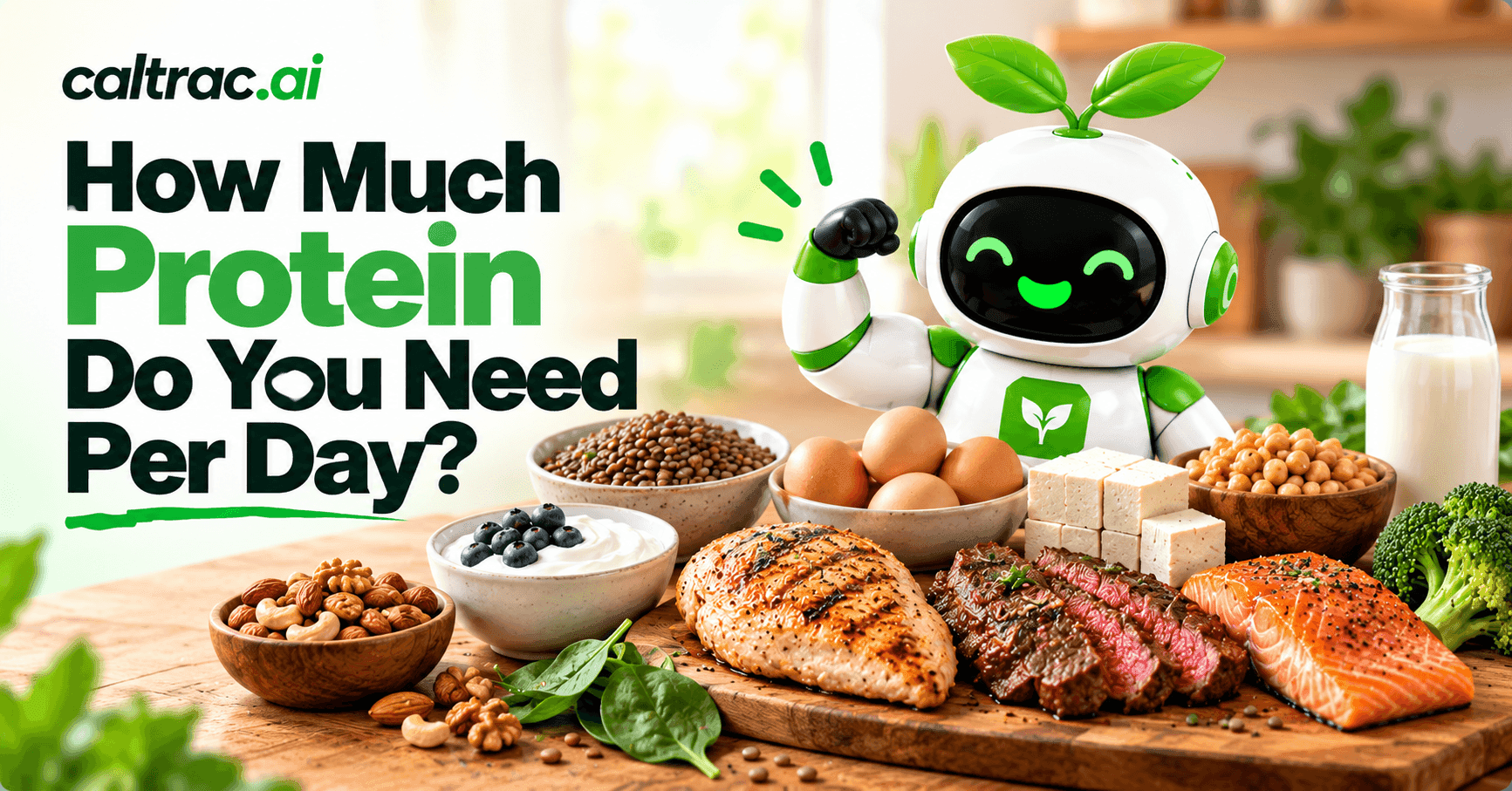
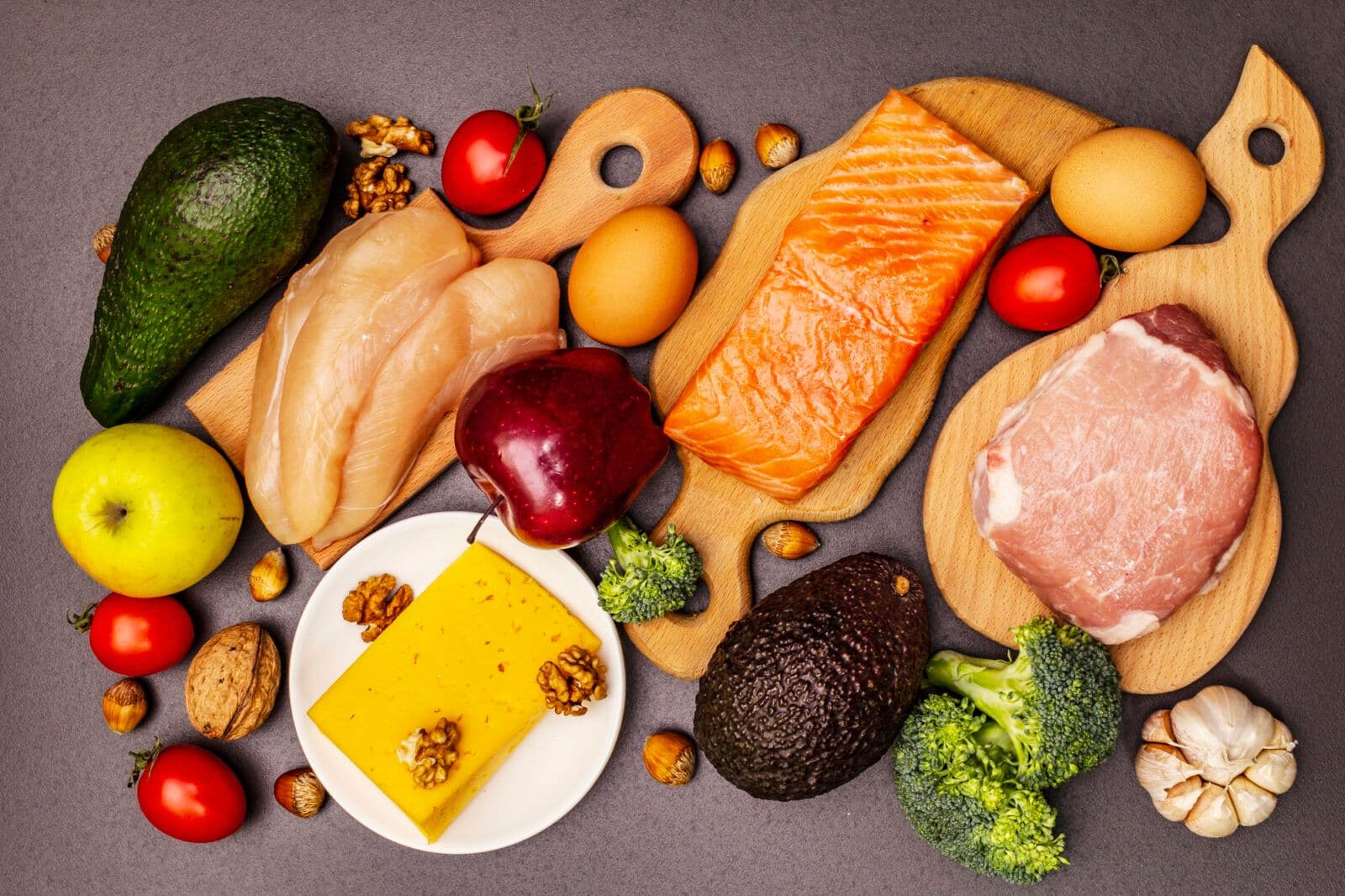
The foods that make this possible are the ones with the most protein for the least volume. Per 100 g: chicken breast 31 g, cottage cheese 10 g in a soft, easy form, Greek yogurt 9.5 g, eggs 12.6 g, tofu 17 g, salmon 22 g, and whey isolate 58 g [14] [15] [16] [17] [18] [19] [20]. A 30 g scoop of whey in water is 17 g of protein for about 108 kcal and almost no stomach volume, which is why it is the single most useful tool for GLP-1 users who cannot face a meal.
A Sample 1,400 Calorie GLP-1 Day
Built for about 120 g of protein and 28 g of fibre, in five small meals, using USDA values.
| Meal | Food | Calories | Protein |
|---|---|---|---|
| Breakfast | 200 g nonfat Greek yogurt [16] with berries | 150 | 20 g |
| Mid-morning | Whey isolate shake, 30 g in water [20] | 108 | 17 g |
| Lunch | 120 g chicken breast [14], 150 g cooked lentils [21], salad with lemon | 390 | 51 g |
| Afternoon | 2 hard-boiled eggs [17] | 155 | 13 g |
| Dinner | 120 g salmon [19], 200 g steamed vegetables, 1 tsp olive oil | 400 | 29 g |
| Total | ~1,200 kcal | ~130 g |
That leaves about 200 kcal for a piece of fruit, a square of chocolate or an extra portion of vegetables, and it stays above the 1,000 to 1,200 kcal floor the consensus sets [4]. The lentils supply most of the fibre; the fluid target is met with water, sugar-free drinks and the shake.
Managing the Side Effects With Food
Gastrointestinal effects are the main reason people struggle on these drugs. Across the pooled semaglutide trials, 43.9% of participants reported nausea (versus 16.1% on placebo), 29.7% diarrhoea, 24.5% vomiting and 24.2% constipation. Almost all events, 98%, were mild to moderate, most occurred during dose escalation, and only 4.3% of participants stopped treatment because of them [5]. The tirzepatide trial reported a similar pattern, with gastrointestinal events that were mostly mild to moderate and concentrated in the dose-escalation period [2].
The consensus dietary advice for the escalation weeks [4]:
- Eat small portions, four to six times a day, and stop as soon as you feel full. Overfilling a slowed stomach is what causes most nausea.
- Avoid high-fat and spicy food during titration. Fat slows gastric emptying further and is the most common nausea trigger.
- Minimise alcohol and fizzy drinks, especially if nauseous or suffering reflux.
- For constipation: fibre at 25 to 30 g a day, more than 2 litres of fluid, and a psyllium supplement if food alone is not enough.
- Choose lean protein and plant foods as the base of every small meal.
Nausea usually eases once the dose stabilises. If it does not, or if vomiting is frequent, that is a conversation with your prescriber, not a reason to eat less.
Micronutrients and Hydration
Eating half as much food means getting half as many vitamins and minerals unless the food is chosen carefully. Reviews published in 2026 identify older adults, people with prior bariatric surgery, those with persistent GI symptoms and those with very low intakes as higher-risk groups, and recommend checking vitamin D, B12, iron, folate, zinc and thiamine in those at risk rather than supplementing everyone blindly [22] [11]. GLP-1 drugs also appear to reduce fluid intake alongside food, and vitamin deficiencies have been reported [23]. Practically: a daily multivitamin is a reasonable insurance policy, fluid has to be deliberate, and protein-rich whole foods, dairy, eggs, fish and legumes, carry most of the nutrients of concern.
Exercise Is Not Optional
The best evidence that movement changes outcomes on GLP-1s comes from a Danish trial. After a 13 kg diet-induced weight loss, adults were assigned to exercise, liraglutide, both, or placebo for a year. Exercise alone kept off 4.1 kg more than placebo, liraglutide alone 6.8 kg, and the combination 9.5 kg, with the combination losing about twice as much body fat as either alone [24]. A year after all treatment stopped, the combination group had kept off 5.1 kg more than the drug-only group and was four times as likely to have maintained a 10% loss [25]. The drug does the appetite work; exercise and protein decide what the lost weight is made of and what happens after.
Planning for the Day the Prescription Ends
The uncomfortable fact in the trial data is regain. When semaglutide was withdrawn after 68 weeks, participants regained two-thirds of their lost weight within a year [26]. When tirzepatide was swapped for placebo after 36 weeks, participants regained 14% of body weight over the following year while those who continued lost a further 5.5% [27].
That is not an argument against the drugs. It is an argument for using the time on them to build the habits that have to carry the weight afterwards: protein-anchored meals, resistance training, and knowing your numbers. The people who kept weight off in the Danish trial were the ones who had exercise in place before the drug stopped [25].
Tracking on a GLP-1
When you are eating 1,200 calories, every bite has to earn its place, and appetite will no longer tell you whether you have hit your protein. A 1,200 kcal day of toast, fruit and soup can carry 40 g of protein; the same calories built as above carry 130 g. The only way to know which day you had is to log it.
That is where tracking earns its keep. Snap a photo of your plate or type "120 g chicken breast, 150 g lentils" and track it automatically with Caltrac. You will see protein logged against the target you set in the macro calculator, and your Apple Health-powered net calorie count will show whether you are above the 1,200 kcal floor. Let the medication handle the hunger; let the app handle the protein.
Frequently Asked Questions
What should I eat on Ozempic or Wegovy to lose weight? Lean protein at every meal to reach 1.2 to 1.5 g per kilogram of body weight per day, 25 to 30 g of fibre, more than 2 litres of fluid, and small low-fat meals during dose increases [4]. The drug controls appetite; the diet protects muscle.
How much protein per day on GLP-1 medication? 1.2 to 1.5 g per kilogram of actual body weight during weight loss, according to a 2025 expert consensus [4]; a 2026 clinical review suggests up to 1.6 g/kg in adults without kidney disease [11].
Why am I losing muscle on Ozempic? Rapid weight loss of any kind removes lean mass. In the tirzepatide body-composition study about 25% of weight lost was lean mass [6]. Adequate protein and resistance training reduce the proportion [9] [10].
What foods should I avoid on GLP-1s? During dose escalation, high-fat and spicy foods, large portions, alcohol and fizzy drinks are the main nausea and reflux triggers [4]. Nothing is permanently forbidden.
How many calories should I eat on Wegovy? The expert consensus sets a floor of 1,000 to 1,200 kcal a day [4]. Most people land between 1,200 and 1,600 without trying; the calorie calculator shows what that is relative to your maintenance.
Will I regain weight if I stop? Trials show most people do: two-thirds of lost weight within a year of stopping semaglutide [26] and 14% of body weight within a year of stopping tirzepatide [27]. Exercise and protein habits built during treatment improve the odds [25].
References
- Wilding JPH, et al. Once-Weekly Semaglutide in Adults with Overweight or Obesity (STEP 1). New England Journal of Medicine. 2021;384(11):989-1002. pubmed.ncbi.nlm.nih.gov
- Jastreboff AM, et al. Tirzepatide Once Weekly for the Treatment of Obesity (SURMOUNT-1). New England Journal of Medicine. 2022;387(3):205-216. pubmed.ncbi.nlm.nih.gov
- KFF. KFF Health Tracking Poll: Prescription Drug Costs, Views on Trump Administration Actions, and GLP-1 Use. 14 November 2025. kff.org
- Sievenpiper JL, et al. Nutritional and lifestyle supportive care recommendations for management of obesity with GLP-1-based therapies: An expert consensus statement using a modified Delphi approach. Obesity Pillars. 2025;17:100228. pubmed.ncbi.nlm.nih.gov
- Wharton S, et al. Gastrointestinal tolerability of once-weekly semaglutide 2.4 mg in adults with overweight or obesity, and the relationship between gastrointestinal adverse events and weight loss. Diabetes, Obesity and Metabolism. 2022;24(1):94-105. pubmed.ncbi.nlm.nih.gov
- Look M, et al. Body composition changes during weight reduction with tirzepatide in the SURMOUNT-1 study of adults with obesity or overweight. Diabetes, Obesity and Metabolism. 2025;27(5):2720-2729. pubmed.ncbi.nlm.nih.gov
- Dobbie LJ, et al. EASO/EFAD/ECPO consensus statement on nutritional and lifestyle care alongside obesity pharmacotherapy. Lancet Diabetes & Endocrinology. 2026;14(9):754-777. pubmed.ncbi.nlm.nih.gov
- Stefanakis K, Kokkorakis M, Mantzoros CS. The impact of weight loss on fat-free mass, muscle, bone and hematopoiesis health: Implications for emerging pharmacotherapies aiming at fat reduction and lean mass preservation. Metabolism. 2024;161:156057. pubmed.ncbi.nlm.nih.gov
- Longland TM, Oikawa SY, Mitchell CJ, Devries MC, Phillips SM. Higher compared with lower dietary protein during an energy deficit combined with intense exercise promotes greater lean mass gain and fat mass loss: a randomized trial. American Journal of Clinical Nutrition. 2016;103(3):738-746. pubmed.ncbi.nlm.nih.gov
- Weinheimer EM, Sands LP, Campbell WW. A systematic review of the separate and combined effects of energy restriction and exercise on fat-free mass in middle-aged and older adults. Nutrition Reviews. 2010;68(7):375-388. pubmed.ncbi.nlm.nih.gov
- Arslan S. Medical nutrition in the GLP-1 era: Protein strategies, micronutrient monitoring, and lean mass preservation. Clinical Nutrition ESPEN. 2026;73:103305. pubmed.ncbi.nlm.nih.gov
- Mozaffarian D, et al. Nutritional priorities to support GLP-1 therapy for obesity: a joint Advisory from the American College of Lifestyle Medicine, the American Society for Nutrition, the Obesity Medicine Association, and The Obesity Society. American Journal of Clinical Nutrition. 2025;122(1):344-367. pubmed.ncbi.nlm.nih.gov
- Mamerow MM, et al. Dietary protein distribution positively influences 24-h muscle protein synthesis in healthy adults. Journal of Nutrition. 2014;144(6):876-880. pubmed.ncbi.nlm.nih.gov
- USDA FoodData Central. Chicken breast, roasted: 165 kcal, 31 g protein per 100 g. SR Legacy 171477. fdc.nal.usda.gov
- USDA FoodData Central. Cheese, cottage, 2%: 81 kcal, 10.4 g protein per 100 g. SR Legacy 172182. fdc.nal.usda.gov
- USDA FoodData Central. Yogurt, Greek, nonfat, plain: 54 kcal, 9.5 g protein per 100 g. SR Legacy 171312. fdc.nal.usda.gov
- USDA FoodData Central. Egg, whole, hard-boiled: 155 kcal, 12.6 g protein per 100 g. SR Legacy 173424. fdc.nal.usda.gov
- USDA FoodData Central. Tofu, firm: 144 kcal, 17.3 g protein per 100 g. SR Legacy 172475. fdc.nal.usda.gov
- USDA FoodData Central. Salmon, Atlantic, farmed, cooked: 206 kcal, 22.1 g protein per 100 g. SR Legacy 175168. fdc.nal.usda.gov
- USDA FoodData Central. Whey protein powder isolate: 359 kcal, 58.1 g protein per 100 g. SR Legacy 173177. fdc.nal.usda.gov
- USDA FoodData Central. Lentils, cooked: 116 kcal, 9 g protein, 7.9 g fibre per 100 g. SR Legacy 172421. fdc.nal.usda.gov
- Sorić T, et al. Hidden Malnutrition in the GLP-1 Era: Micronutrient Status, Protein Adequacy, and Lean Mass as Emerging Nutritional Considerations: A Narrative Review. Nutrients. 2026;18(17):2757. pubmed.ncbi.nlm.nih.gov
- Fujioka K. Effect of GLP-1 receptor agonist on nutrient intake: A narrative review. Nutrition in Clinical Practice. 2026;41(5):1308-1317. pubmed.ncbi.nlm.nih.gov
- Lundgren JR, et al. Healthy Weight Loss Maintenance with Exercise, Liraglutide, or Both Combined. New England Journal of Medicine. 2021;384(18):1719-1730. pubmed.ncbi.nlm.nih.gov
- Jensen SBK, et al. Healthy weight loss maintenance with exercise, GLP-1 receptor agonist, or both combined followed by one year without treatment. EClinicalMedicine. 2024;69:102475. pubmed.ncbi.nlm.nih.gov
- Wilding JPH, et al. Weight regain and cardiometabolic effects after withdrawal of semaglutide: The STEP 1 trial extension. Diabetes, Obesity and Metabolism. 2022;24(8):1553-1564. pubmed.ncbi.nlm.nih.gov
- Aronne LJ, et al. Continued Treatment With Tirzepatide for Maintenance of Weight Reduction in Adults With Obesity: The SURMOUNT-4 Randomized Clinical Trial. JAMA. 2024;331(1):38-48. pubmed.ncbi.nlm.nih.gov