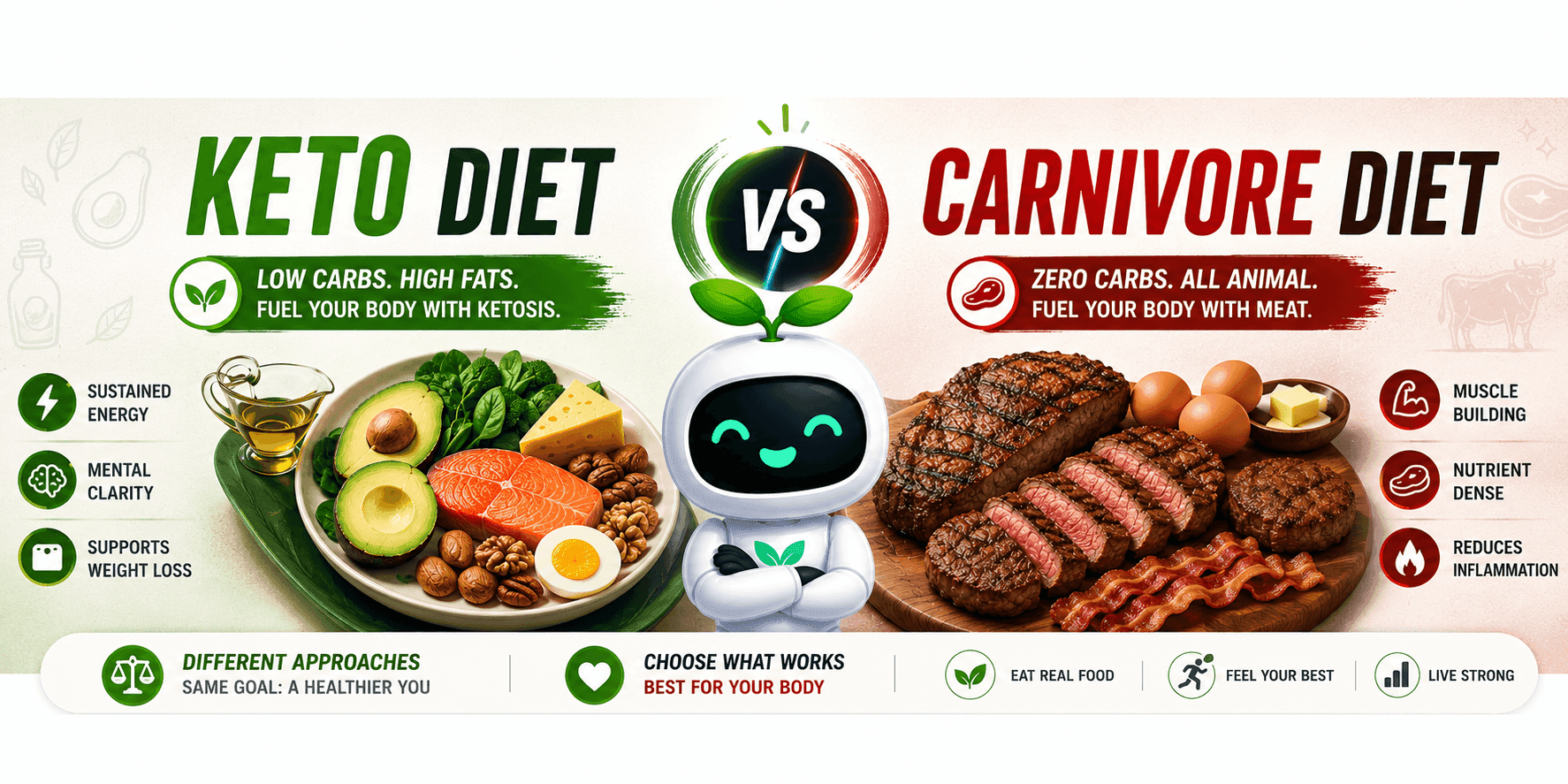



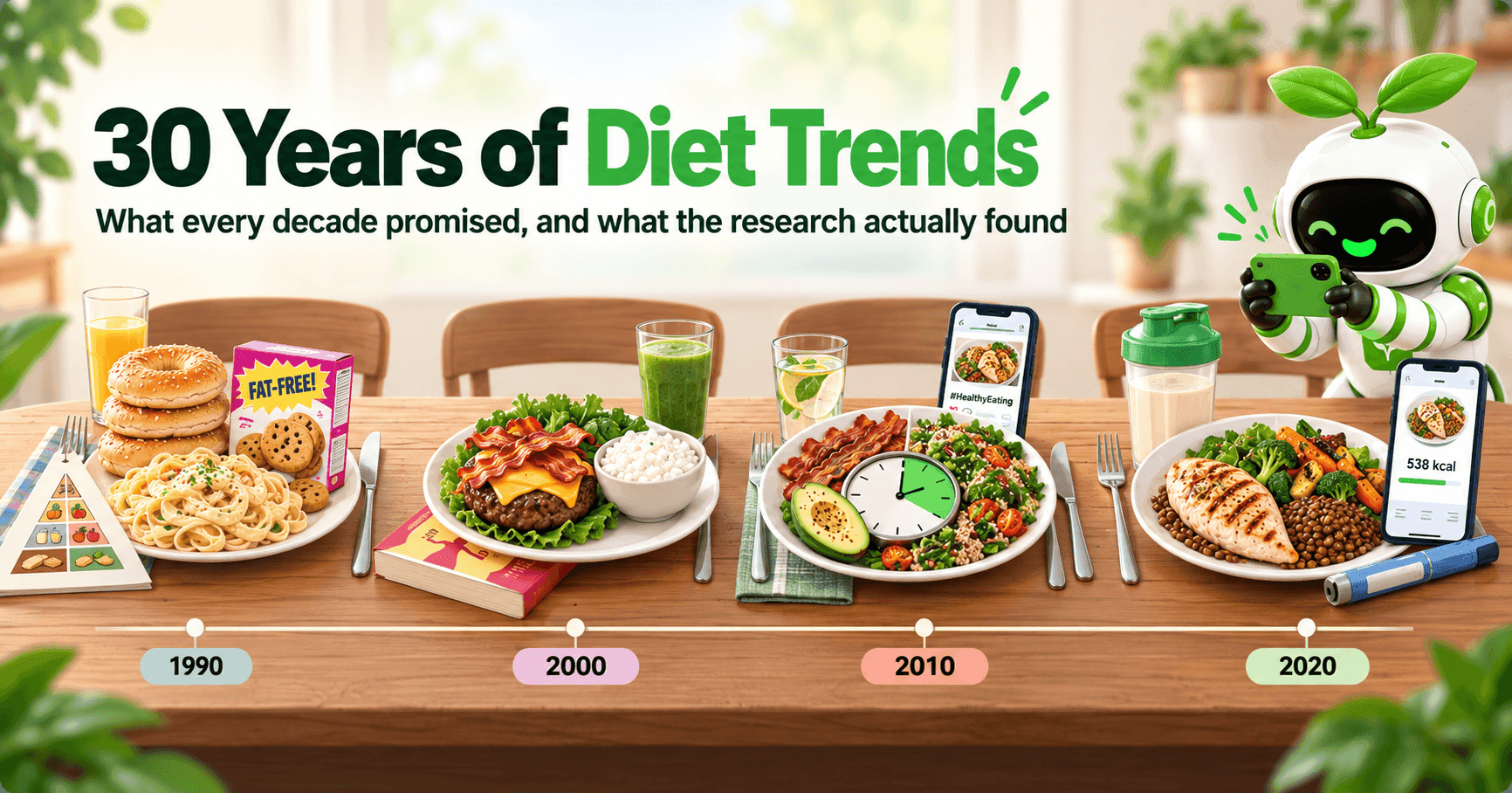
In 1992 the US government told Americans to build their meals on six to eleven servings of bread, rice and pasta, and a fat-free cookie became one of the best-selling grocery items in the country. In 2026 the same government told Americans to eat more protein, avoid highly processed packaged food, and roughly one in eight adults was taking a weekly injection that does what no diet book ever managed. Between those two moments sit three decades of diet trends, each arriving with a bestseller, a villain nutrient and a promise, and each leaving behind a little more evidence about what actually works.
This is the story of those trends, decade by decade: what each diet claimed, how big it got, what the trials eventually showed, and what survived into the next era. The numbers come from the sources linked throughout, which include USDA and CDC data, the major randomised trials, publisher sales reports and consumer surveys. Where a popular claim could not be verified, it has been left out.
The Backdrop: Thirty Years of a Widening Problem
Any history of dieting has to start with the thing diets were supposed to fix. Between the 1988 to 1994 and 1999 to 2000 national health surveys, the share of US adults with obesity jumped from 22.9% to 30.5% [1]. It kept climbing to a peak of 42.4% in 2017 to 2018 before edging back to 40.3% in the 2021 to 2023 survey, a change statisticians did not consider significant, while severe obesity continued to rise [2].
The low-fat decade did not cause that, but it did not stop it either. Between the early 1970s and 2000, Americans did exactly what they were told: fat fell from about 37% of calories to under 33%. Carbohydrate rose from 42% to 49% of calories for men, and total calories went up by roughly 170 a day for men and 335 a day for women [3]. Every diet trend that followed was, in one way or another, a reaction to that outcome.
The 1990s: Fat Is the Enemy, Then Suddenly Carbs Are
Low-fat and fat-free eating
The claim: Dietary fat, not calories, makes people fat and gives them heart disease. Cut fat to 30% of calories or less, or to 10% in the Dean Ornish and Pritikin programmes, and you can eat freely.
How big it got: The 1992 USDA Food Guide Pyramid put grains at the base and fats at the tip. Food companies responded with an avalanche of fat-free products, and none captured the era like Nabisco's SnackWell's cookies, launched in 1992. Sales hit $490 million in 1995 before falling 35% over the next two years as shoppers noticed they were not getting thinner [4].
What the science said: The low-fat idea had genuine clinical roots. Ornish's 1990 Lifestyle Heart Trial showed that a 10%-fat vegetarian diet with exercise and stress management could modestly reverse coronary artery narrowing in 48 patients [5]. But as a weight-loss strategy for the general population, the results were underwhelming. The Women's Health Initiative, the largest diet trial ever run, assigned 48,835 women to a low-fat pattern or usual diet. The low-fat group was 1.9 kg lighter after one year and just 0.4 kg lighter after seven and a half [6]. A 2015 meta-analysis of 53 trials and 68,128 participants concluded that low-fat diets were no better than other diets of similar intensity for long-term weight loss, and slightly worse than low-carbohydrate diets [7].
What stuck: The idea that fat quality matters more than fat quantity, which fed directly into the Mediterranean diet's later rise.
The Atkins revival
The claim: Carbohydrate, through insulin, drives fat storage. Cut carbs to near zero, enter ketosis, and lose weight without counting calories or limiting fat.
How big it got: Robert Atkins first published in 1972, but the 1992 edition of Dr. Atkins' New Diet Revolution became the counter-movement to low-fat orthodoxy. By April 1998 it had 2.4 million copies in print after 65 weeks on the bestseller list [8]; by November 2003 the figure was more than 16 million copies and over six years on the New York Times list [9]. A CDC survey in late 2002 found that 12.5% of American adults had tried a low-carb, high-protein diet at some point and 3.4% were on one at the time [10].
What the science said: The first serious trial came in 2003. Sixty-three obese adults were randomised to Atkins or a conventional low-calorie diet. At six months the Atkins group had lost more than twice as much weight, 7.0% versus 3.2%, but by twelve months the gap had closed and was no longer statistically significant [11]. A 2006 meta-analysis of five such trials found the same pattern: a 3.3 kg advantage for low-carb at six months that had disappeared by one year [12].
What stuck: The six-month head start became the signature of every low-carb diet since. So did the finding that it fades.
The Zone
The claim: Barry Sears' 1995 book argued that eating every meal at a precise 40% carbohydrate, 30% protein, 30% fat ratio controls insulin and hormone-like compounds called eicosanoids, producing fat loss and peak performance.
How big it got: From a first printing of 25,000 copies in May 1995, The Zone sold over 400,000 hardcovers within a year and spent twelve weeks on the New York Times list [13], reaching about 1.6 million copies by 1998 [8].
What the science said: A 2003 review in the Journal of the American College of Nutrition found little scientific support for the eicosanoid mechanism at the heart of the book [14]. When the Zone was finally tested head to head in Stanford's A TO Z trial, it was the worst performer of four diets, with 1.6 kg of weight loss at one year against 4.7 kg for Atkins [15].
What stuck: The 40/30/30 split quietly became the default template for "balanced" macro tracking, which is how most calorie-counting apps still present it.
Sugar Busters
The claim: Sugar and high-glycemic carbohydrates, including potatoes, carrots and white bread, spike insulin and cause fat storage. Eliminate them and fat loss follows regardless of calories.
How big it got: Written by a former Fortune 500 executive and three New Orleans physicians, Sugar Busters! was self-published in 1995, sold 165,000 copies locally, and reached number one on the New York Times list after Ballantine's national edition in May 1998 [16] [8].
What the science said: Sugar Busters was the first mass-market diet built on the glycemic index, a concept whose clinical significance a 2002 JAMA review described as still under debate despite the diet books built on it [17]. The GI idea would get its fairer hearing a decade later.
What stuck: The word "sugar" as the villain, which returned with a vengeance in the 2020s, when "low-sugar" became the second most-followed eating pattern in America [18].
Weight Watchers Points
The claim: Give every food a single Points value, calculated from calories, fat and fibre, and stay within a daily budget. No forbidden foods, no counting calories directly.
How big it got: The system was developed in Weight Watchers' UK subsidiary in 1996 and rolled out across North America in 1997. Attendance at company-owned North American meetings rose 70%, from 7.8 million in fiscal 1997 to 13.2 million in fiscal 2000 [19].
What the science said: Weight Watchers became one of the few commercial programmes with trial evidence. A 2003 JAMA trial of 423 adults found Weight Watchers participants lost 4.3 kg at one year and kept off 2.9 kg at two, versus 1.3 kg and 0.2 kg for a self-help group [20]. A 2015 systematic review confirmed at least 2.6% greater weight loss than control at twelve months [21].
What stuck: The behavioural model. Points was a simplified calorie budget with weekly accountability, and it remains the template for every tracking app since.
Meal-replacement shakes
The claim: A shake for breakfast, a shake for lunch, then a sensible dinner. Replacing two meals with a 200-calorie shake makes calorie restriction automatic.
How big it got: Slim-Fast held 70% of the meal-replacement market in 1992, sold $611 million of product in 1999, and was bought by Unilever in 2000 for $2.3 billion [22].
What the science said: An industry-funded pooled analysis of six trials found partial meal replacement produced about 2.4 kg more weight loss than conventional diets at one year, though the difference was not statistically significant [23]. The 2015 review of commercial programmes called the SlimFast evidence mixed [21].
What stuck: The format. Protein shakes, bars and ready meals are now a core product category rather than a diet.
The Blood Type Diet
The claim: Your ABO blood type determines how you digest food, so each type needs a different diet: meat-heavy for type O, vegetarian for type A.
How big it got: Peter D'Adamo's 1996 Eat Right 4 Your Type had 422,500 copies in print by 1998 [8] and its publisher claims over seven million sold worldwide.
What the science said: A 2013 systematic review in the American Journal of Clinical Nutrition screened 1,415 references and found not one study that tested the hypothesis, concluding that no evidence exists to validate the diet [24]. A 2014 study of 1,455 adults found that people following the "type A" diet did have better cardiometabolic markers, but the effect was identical regardless of their actual blood type, which is to say the diet worked because it was a plant-heavy diet, not because of blood [25].
What stuck: Nothing scientifically, but it was the first mass-market "personalised nutrition" pitch, an idea that would return in the 2020s with better tools.
The 2000s: The Low-Carb Boom, the Crash, and the Rise of Evidence
Atkins goes mainstream, then bankrupt
The decade opened with low-carb at its peak. Market researcher NPD Group found 9.1% of US adults on a low-carb diet in February 2004 [26]. Supermarkets stocked low-carb bread, pasta and beer. Then it collapsed as fast as it rose: by February 2005 the figure was 3.6%, and in July 2005 Atkins Nutritionals filed for Chapter 11 bankruptcy with about $300 million in debt after losing $341 million the previous year [26] [27].
What killed it was partly fatigue and partly science. In 2005, a JAMA trial put Atkins, Ornish, Weight Watchers and the Zone head to head for a year. All four produced modest and statistically similar weight loss, between 2.1 and 3.3 kg, and the single best predictor of success was not which diet a person was assigned but how well they stuck to it [28]. In 2009 the largest macronutrient trial ever run, 811 adults across four diets ranging from 20% to 40% fat, found everyone lost about 6 kg at six months and 3 to 4 kg at two years, with no difference between diets [29].
South Beach
The claim: Cardiologist Arthur Agatston's 2003 book promised a kinder low-carb: choose "good" carbohydrates with a low glycemic index and "good" unsaturated fats across three phases, with no calorie counting.
How big it got: It was the publishing phenomenon of the decade. Within seven months of its April 2003 launch it had 4.7 million copies in print [9], and by August 2004 the book and its spin-offs had reached 13 million combined [30].
What the science said: South Beach was never tested as such, but its glycemic-load logic was. An 18-month trial found no overall weight-loss difference between a low-glycemic-load and a low-fat diet, though people with high insulin secretion did better on low-GL, losing 5.8 kg versus 1.2 kg [31].
What stuck: The "good carbs, good fats" framing became the mainstream compromise position and is more or less what the Mediterranean diet says.
Glycemic index diets and Volumetrics
Two quieter, more academic diets ran alongside the bestsellers. Glycemic-index diets got their fairest hearing in a 2007 Cochrane review of six trials, which found about 1.1 kg more weight loss than comparison diets along with larger LDL reductions [32]. Volumetrics, from Penn State researcher Barbara Rolls, argued that eating foods with low energy density, meaning high water and fibre content, lets people eat satisfying portions on fewer calories. Her year-long trial in 97 obese women found that adding fruit and vegetables to a reduced-fat diet produced 7.9 kg of weight loss versus 6.4 kg for reduced-fat alone, with less hunger [33]. Neither sold like Atkins. Both held up better.
Detox, raw food and juice cleanses
The claim: A liquid fast of lemon juice, maple syrup and cayenne water "flushes toxins" and produces rapid weight loss.
How big it got: The Master Cleanse dated from the 1940s, but it exploded in 2006 after Beyoncé reportedly used it to lose about 20 pounds in ten days for the film Dreamgirls. Juice bars and bottled cleanses followed.
What the science said: Harvard Health noted in 2008 that there were no data on the diet in the medical literature, that the weight lost was mostly water, and that risks included electrolyte depletion [34]. A 2015 critical review found that no randomised controlled trials of commercial detox diets existed at all [35].
What stuck: The word "detox," which remains one of the most durable marketing terms in wellness despite having no physiological meaning.
The Mediterranean diet enters the mainstream
The most consequential diet of the 2000s was not a new one. It was the slow accumulation of evidence behind a traditional eating pattern. The Lyon Diet Heart Study had shown in 1999 that heart attack survivors on a Mediterranean-type diet suffered a fraction of the cardiac events of controls over four years [36]. In 2008 a BMJ meta-analysis of 1.57 million people found that each two-point rise in Mediterranean adherence cut overall mortality by 9% [37]. The same year, a two-year Israeli trial put it head to head with low-fat and low-carb diets and found it matched low-carb on weight loss, 4.4 versus 4.7 kg, while beating both on glycaemic control in people with diabetes [38].
The capstone came later. The Spanish PREDIMED trial, originally published in 2013, retracted over randomisation irregularities and republished with corrected analysis in 2018, followed 7,447 high-risk adults for nearly five years and found that a Mediterranean diet supplemented with olive oil or nuts cut major cardiovascular events by about 30% [39].
DASH
Dietary Approaches to Stop Hypertension was designed by the NIH, not a diet author. Its 1997 trial in 459 adults showed that a pattern rich in fruit, vegetables and low-fat dairy lowered blood pressure by 5.5/3.0 mm Hg overall and 11.4/5.5 mm Hg in people with hypertension, in eight weeks, with no weight loss or sodium change [40]. When U.S. News & World Report launched its Best Diets rankings in June 2011, with 22 experts scoring 20 diets, DASH was named Best Diet Overall and the Mediterranean diet tied for second [41]. The age of the ranked, expert-vetted diet had begun.
The calorie-counting comeback
While diet books fought over macronutrients, a quieter shift was happening online. MyFitnessPal launched in September 2005 as a free web-based food diary. By the time Under Armour bought it in 2015 for $475 million it had 80 million users [42]. NutriSystem, a 1970s brand reborn as a direct-to-consumer meal delivery business, grew revenue from $22.6 million in 2003 to $212.5 million in 2005 on the back of $44 million in television advertising [43]. The two models, self-monitoring and portion control, were the least glamorous ideas in dieting. They were also the ones the Dansinger trial had just shown mattered most.
The 2010s: Tribes, Elimination and the Decade of Keto
Paleo and Whole30
The claim: Humans are healthiest eating what was available before agriculture: meat, fish, vegetables, fruit, nuts. Grains, dairy, legumes and processed food are out. Whole30, created in 2009, packaged the same logic as a 30-day elimination "reset."
How big it got: Paleo was Google's most-searched diet of 2013 [44]. In 2018, 7% of Americans told the International Food Information Council they had followed paleo in the past year and 5% had done Whole30 [45].
What the science said: A 2015 meta-analysis found four small randomised trials totalling 159 people. Paleo produced somewhat greater short-term improvements in waist circumference and triglycerides than guideline diets, but the authors rated the evidence quality low [46]. No peer-reviewed trial of Whole30 has been published.
What stuck: The elimination-diet template and a renewed respect for whole, unprocessed food, which the ultra-processed-food movement would later formalise.
Gluten-free as a lifestyle
The claim: Avoiding gluten improves digestion, energy and weight even without celiac disease.
How big it got: Mintel sized the US gluten-free market at $10.5 billion in 2013 and forecast $15.6 billion by 2016 [47]. Meanwhile, national survey data showed celiac disease prevalence held steady at about 0.7% while gluten-free eating among people without celiac disease roughly tripled, from 0.5% in 2009 to 1.7% in 2014 [48] [49].
What the science said: For people without celiac disease or diagnosed sensitivity, no trial has shown gluten avoidance aids weight loss. The weight people lost usually came from cutting bread, pasta and pastries, not from removing a protein.
What stuck: Gluten-free products as a permanent supermarket category, and a template for the "free-from" marketing that followed.
Intermittent fasting
The claim: When you eat matters as much as what you eat. Restrict the eating window, either two low-calorie days a week (5:2) or eight hours a day (16:8), and you get the benefits of calorie restriction with less effort.
How big it got: Michael Mosley's The Fast Diet, written after his 2012 BBC documentary, sold 350,000 copies in the UK in its first year and over a million since [50]. By 2018 intermittent fasting was the single most-followed named eating pattern in the US at 10% of adults [45].
What the science said: This was the decade's most honestly tested trend. Harvie's 2011 trial found 5:2 and continuous restriction produced the same weight loss over six months, 6.4 versus 5.6 kg [51]. A one-year trial of alternate-day fasting found no advantage over daily calorie restriction and a higher dropout rate, 38% versus 29% [52]. The TREAT trial of 16:8 eating, published in 2020, found it produced 0.26 kg more weight loss than eating normally over twelve weeks, a difference indistinguishable from zero [53].
What stuck: Fasting as a scheduling tool rather than a metabolic trick. It helps some people eat less. It does not do anything calories do not.
Keto's second coming
The claim: Cut carbohydrate to under 50 g a day, enter ketosis, suppress appetite and burn fat faster.
How big it got: The ketogenic diet had been an epilepsy therapy since the 1920s. As a consumer trend it exploded late in the decade: Google searches quadrupled during 2017 [54], and keto was the most-searched diet of 2018, ahead of Noom, carnivore and Mediterranean [55].
What the science said: A 2013 meta-analysis of thirteen trials lasting at least a year found ketogenic diets produced 0.91 kg more weight loss than low-fat diets, along with higher LDL cholesterol [56]. The "metabolic advantage" claim was tested directly in a 2016 metabolic-ward study: when seventeen men switched to a ketogenic diet with identical calories, energy expenditure rose by only 57 to 151 calories a day and body-fat loss actually slowed [57].
What stuck: Keto never went away so much as it split: a therapeutic tool for epilepsy and some type 2 diabetes, a lifestyle diet for a committed minority, and a marketing label on snack bars.
Plant-based goes mainstream
The claim: Whole-food plant-based eating prevents and reverses chronic disease and controls weight.
How big it got: The 2011 documentary Forks Over Knives grossed under $750,000 in cinemas [58] but became a streaming phenomenon. Veganuary's January pledge drew 250,000 sign-ups in 2019, as many as its previous four years combined [59]. That May, Beyond Meat's shares rose 163% on their first day of trading, the best IPO debut of the year [60].
What the science said: A 2016 meta-analysis of twelve randomised trials found vegetarian diets produced about 2 kg more weight loss than comparison diets, and vegan diets about 2.5 kg [61].
What stuck: Plant-based as a permanent option rather than an identity, and the flexitarian compromise, which U.S. News ranked third-best diet overall in both 2018 and 2019 [62] [63].
Clean eating
The claim: Eat only whole, "real," unprocessed food and your body will be clean and healthy. Often grain-free and dairy-free in practice.
How big it got: It was the first diet trend driven by Instagram rather than a book. Wellness bloggers with hundreds of thousands of followers sold millions of cookbooks under the #eatclean banner [64].
What the science said: When researchers compared 86 recipes from popular clean-eating blogs with 86 matched conventional recipes, they found no difference in calories, carbohydrate, sugar or sodium, and fewer than 10% of either set met WHO limits for fat and sugar [65].
What stuck: The word "clean" and a general suspicion of processed food that, stripped of its moral language, became the ultra-processed food debate of the 2020s.
The decade's verdict: the Mediterranean diet and the end of the diet wars
Two pieces of evidence closed the decade. In 2018 the Mediterranean diet tied with DASH for U.S. News' Best Diet Overall among 40 ranked diets [62], then took the top spot alone in 2019 for the first time in the rankings' history [63], a position it has held every year since.
The same year, Stanford's DIETFITS trial ended the low-fat versus low-carb argument for most practical purposes. Six hundred and nine adults were randomised to a healthy low-fat or healthy low-carb diet for twelve months. The low-fat group lost 5.3 kg, the low-carb group 6.0 kg, a difference of 0.7 kg that was not statistically significant. Neither genotype nor insulin secretion predicted which diet worked for whom [66]. A 2014 meta-analysis of 48 trials had already found that differences between named diet brands were minimal and recommended "any diet that a patient will adhere to" [67]. A 2020 network meta-analysis of 121 trials and nearly 22,000 people added the final word: most diets produce 4 to 5 kg of weight loss at six months, and by twelve months the differences between them, and most of the weight loss itself, have largely disappeared. The one exception was the Mediterranean diet, whose cardiovascular benefits persisted [68].
The 2020s: Protein, Fasting, Ultra-Processed Food and the Injection
Dieting becomes the norm
The defining statistic of this decade is not any single diet but how many people are on one. In 2018, 36% of Americans told the International Food Information Council they had followed a specific eating pattern in the past year. By 2020 it was 43%, by 2022 it was 52%, and in the 2026 survey it reached 64% [18]. Dieting is no longer something a minority does in January. It is what most adults say they are doing.
Intermittent fasting settles in
In 2020 intermittent fasting became the most-followed named diet in America, displacing clean eating [69], and it has stayed in the top tier since at about 15% of adults [18]. The science did not improve its case. A 2022 New England Journal of Medicine trial gave 139 adults a calorie-restricted diet with or without an eight-hour eating window for a year. The fasting group lost 8.0 kg and the non-fasting group 6.3 kg, a difference that did not reach significance [70]. Timing added nothing beyond the calorie cut. People kept doing it anyway, because it is a simple rule.
Carnivore and "animal-based"
The claim: Humans thrive on animal foods alone. Plants are unnecessary or actively harmful.
How big it got: Promoted from 2018 by former orthopaedic surgeon Shawn Baker, including on the Joe Rogan podcast [71], carnivore grew steadily on social media before peaking in Google search interest in January 2025 and falling back toward its earlier baseline through 2026 [72].
What the science said: There are no randomised trials. The only published data is a 2021 survey of 2,029 self-selected carnivore dieters recruited through social media, in which 95% reported improved health but the subset who reported bloodwork had a median LDL cholesterol of 172 mg/dL, well into the high range [73].
What stuck: Too early to say. It reads today like the Atkins of its generation, a backlash diet that will leave the protein emphasis behind and lose the extremism.
GLP-1 drugs change the question
Nothing in this history compares to what happened next. On 4 June 2021 the FDA approved semaglutide, sold as Wegovy, the first new weight-management drug since 2014 [74]. In its pivotal trial, participants lost 14.9% of body weight over 68 weeks against 2.4% on placebo, and half of them lost more than 15% [75]. In November 2023 tirzepatide, sold as Zepbound, followed, with 20.9% weight loss at the highest dose in its own trial [76] [77]. For comparison, the best diets in the trials above produce 5 to 8% at one year.
Uptake has been extraordinary. KFF polling in November 2025 found 18% of US adults had used a GLP-1 drug and 12% were currently taking one, double the share of eighteen months earlier [78]. Gallup found self-reported adult obesity fell from a peak of 39.9% in 2022 to 37.0% in 2025, with the largest declines in the age groups with the highest GLP-1 use [79]. When U.S. News surveyed 58 experts on the top health trends for 2026, GLP-1 expansion was named first by 52% of them [80].
The drugs did not end dieting. They changed what it is for. Users and their doctors now worry about preserving muscle while losing weight fast, which has driven the single largest shift in eating patterns of the decade.
High-protein everything
The claim: More protein, often 1.6 to 2.2 g per kilogram of body weight, improves fullness, body composition and healthy ageing.
How big it got: In 2018, 4% of Americans said they followed a high-protein diet. By 2023 it was 18%, by 2025 23%, and in 2026 it reached 27%, the most-followed eating pattern in the country for the fourth year running [18]. Seven in ten Americans say they are actively trying to consume more protein [81]. In January 2026 the US Dietary Guidelines themselves raised the recommended protein intake to 1.2 to 1.6 g per kilogram, up from the long-standing 0.8 [82].
What the science said: The protein-and-weight-loss evidence is solid, as covered in the trials above. The irony is that Americans were never actually short of protein: national survey analysis shows adults have averaged 1.1 to 1.3 g per kilogram since the early 2000s, comfortably above the old recommendation [83].
What stuck: This one is still being written, but protein has replaced fat and carbohydrate as the macronutrient people organise their diets around.
Personalised nutrition and wearable glucose monitors
The claim: Individuals respond so differently to the same food that diet advice should be tailored using your own biomarkers.
How big it got: The 2020 PREDICT study measured responses to identical meals in 1,002 people and found enormous variation: blood fat responses varied by over 100% between individuals and glucose responses by 68% [84]. Companies such as ZOE and Levels built subscription programmes on that finding. In March 2024 the FDA cleared the first over-the-counter continuous glucose monitor, explicitly for people without diabetes who want to see how food affects their blood sugar [85].
What the science said: The variation is real. Whether acting on it produces better weight or health outcomes than standard advice has not yet been shown in a long-term randomised trial, and the DIETFITS finding that insulin secretion did not predict diet response is a reminder that personalisation is harder than it looks [66].
Ultra-processed food becomes the villain
The claim: Industrial formulations, defined by the NOVA classification as foods made from ingredients you would not find in a home kitchen, drive overeating and chronic disease regardless of their nutrient content [86].
How big it got: The idea moved from academic to mainstream after a 2019 NIH study locked twenty adults in a metabolic ward for a month and let them eat freely from either ultra-processed or unprocessed menus matched for calories, sugar, fat and fibre on offer. On the ultra-processed diet they ate 508 more calories a day and gained 0.9 kg in two weeks; on the unprocessed diet they lost 0.9 kg [87]. In January 2026 the US Dietary Guidelines urged Americans to avoid "highly processed" packaged foods, the first time the guidelines had taken that position, and did so over the objection of their own advisory committee, which had judged the evidence insufficient [82].
What stuck: Processing level, rather than any single nutrient, as the organising idea for what counts as healthy food. Every diet in this article, from Ornish to carnivore, agrees on this point and almost nothing else.
The anti-diet counter-movement
As dieting became universal, so did its opposition. Intuitive eating, a framework created by dietitians Evelyn Tribole and Elyse Resch in 1995, became a social-media movement in the early 2020s under the "anti-diet" banner. About 5% of Americans say they follow it [81]. A 2021 meta-analysis of 97 studies found intuitive eating consistently associated with less disordered eating and better body image and wellbeing, though 89% of the studies were cross-sectional and evidence on weight outcomes remains thin [88].
Tracking goes photographic
The oldest tool in this story has had the newest upgrade. Calorie counting, the method behind Weight Watchers Points and MyFitnessPal, is followed by 16% of Americans in 2026, up from 12% two years earlier [18]. What changed is the interface. Photo-first apps that use AI to estimate a meal from a picture grew fast enough that MyFitnessPal acquired its photo-logging rival Cal AI, which had reached roughly 15 million downloads, in a deal closed in late 2025 [89].
The technology is not yet perfect. An NIH study presented in July 2026 tested four photo-based apps against 102 meals prepared in a metabolic kitchen and found they underestimated energy by 250 to 345 calories per meal on average, with the worst errors on high-fat meals [90]. The direction of travel, though, is clear. Thirty years of trials say adherence and self-monitoring beat any particular diet. The tools for self-monitoring have never been easier to use.
That is where tracking earns its keep. Snap a photo of your lunch or type "150 g grilled chicken" and track it automatically with Caltrac. You will see the calories, protein and fibre logged in seconds, and your Apple Health-powered net calorie count will show exactly how it fits your day. Follow whichever eating pattern suits you; let the app watch the numbers.
What Thirty Years of Diet Trends Actually Taught Us
Strip away the book covers and the hashtags and the trials point in one direction.
-
The villain nutrient keeps changing. The results do not. Fat in the 1990s, carbs in the 2000s, gluten and grains in the 2010s, processing in the 2020s. In head-to-head trials, low-fat, low-carb, Mediterranean, Zone and Weight Watchers all land within a kilogram or two of each other at one year [28] [29] [66] [68].
-
Six-month results sell books. Twelve-month results tell the truth. Atkins in 2003, alternate-day fasting in 2017 and keto throughout all showed early leads that vanished by a year [11] [52] [56].
-
Adherence is the active ingredient. The 2005 trial that found adherence, not diet assignment, predicted weight loss has been confirmed by every comparison since [28] [67].
-
Only one diet has outlasted the trends. The Mediterranean diet went from a researcher's observation to a trial-backed pattern to eight consecutive years as America's top-rated diet [91], largely because it was never sold as a weight-loss trick.
-
The question itself has changed. With roughly one in eight American adults on a GLP-1 drug, the job of a diet is shifting from producing weight loss to supporting it: enough protein, enough fibre, enough real food. That is a better question than the one the 1990s asked, and it is the one the next decade of trends will try to answer.
Frequently Asked Questions
What was the most popular diet of the 1990s? Low-fat eating dominated the decade, backed by the 1992 Food Guide Pyramid and products like SnackWell's, which reached $490 million in sales in 1995 [4]. Atkins was the leading counter-trend, with over 16 million copies in print by 2003 [9].
Why did the Atkins diet collapse in the 2000s? Consumer surveys showed low-carb dieting fell from 9.1% of adults in early 2004 to 3.6% a year later, and Atkins Nutritionals went bankrupt in 2005 [26]. Trials published in the same period showed its early weight-loss advantage disappeared by twelve months [11] [12].
Does intermittent fasting work better than regular calorie restriction? Not in randomised trials. Studies of 5:2, alternate-day fasting and 16:8 eating have all found weight loss equal to, not greater than, ordinary calorie restriction [51] [52] [53] [70].
What is the most popular diet in 2026? High-protein eating, followed by 27% of Americans, ahead of low-sugar, mindful eating, clean eating, calorie counting and intermittent fasting [18].
Which diet do experts rate highest? The Mediterranean diet, named best diet overall by U.S. News & World Report every year from 2018 through 2025 [63] [91].
Have GLP-1 drugs replaced dieting? No, but they have changed it. About 12% of US adults were taking one in late 2025 [78], and the strongest eating trend of the decade, high protein, is partly driven by the need to protect muscle while losing weight on them.
References
- CDC/NCHS. Prevalence of Overweight, Obesity, and Extreme Obesity Among Adults: United States, Trends 1960-1962 Through 2009-2010 (Health E-Stat). cdc.gov
- CDC/NCHS. Obesity and Severe Obesity Prevalence in Adults: United States, August 2021-August 2023 (Health E-Stat 111, 2026). cdc.gov
- CDC. Trends in intake of energy and macronutrients, United States, 1971-2000. MMWR. 2004;53(4):80-82. cdc.gov
- New Hope Network. Remembering the cookie that almost changed America (SnackWell's sales history). newhope.com
- Ornish D, et al. Can lifestyle changes reverse coronary heart disease? The Lifestyle Heart Trial. Lancet. 1990;336(8708):129-133. pubmed.ncbi.nlm.nih.gov
- Howard BV, et al. Low-fat dietary pattern and weight change over 7 years: the Women's Health Initiative Dietary Modification Trial. JAMA. 2006;295(1):39-49. pubmed.ncbi.nlm.nih.gov
- Tobias DK, et al. Effect of low-fat diet interventions versus other diet interventions on long-term weight change in adults: a systematic review and meta-analysis. Lancet Diabetes Endocrinol. 2015;3(12):968-979. pubmed.ncbi.nlm.nih.gov
- Publishers Weekly. PW Seeking a Slimmer Summer (diet book sales). 27 April 1998. publishersweekly.com
- Publishers Weekly. Weighing the Options (diet book sales). 24 November 2003. publishersweekly.com
- Blanck HM, Gillespie C, et al. Use of low-carbohydrate, high-protein diets among Americans: correlates, duration, and weight loss. MedGenMed. 2006;8(2):5. pubmed.ncbi.nlm.nih.gov
- Foster GD, et al. A randomized trial of a low-carbohydrate diet for obesity. N Engl J Med. 2003;348(21):2082-2090. pubmed.ncbi.nlm.nih.gov
- Nordmann AJ, et al. Effects of low-carbohydrate vs low-fat diets on weight loss and cardiovascular risk factors: a meta-analysis of randomized controlled trials. Arch Intern Med. 2006;166(3):285-293. pubmed.ncbi.nlm.nih.gov
- Funding Universe. Balance Bar Company History (sales of The Zone). fundinguniverse.com
- Cheuvront SN. The Zone Diet phenomenon: a closer look at the science behind the claims. J Am Coll Nutr. 2003;22(1):9-17. pubmed.ncbi.nlm.nih.gov
- Gardner CD, et al. Comparison of the Atkins, Zone, Ornish, and LEARN diets for change in weight and related risk factors among overweight premenopausal women: the A TO Z Weight Loss Study. JAMA. 2007;297(9):969-977. pubmed.ncbi.nlm.nih.gov
- 64 Parishes (Louisiana Endowment for the Humanities). Diet Gospel: the story of Sugar Busters! 64parishes.org
- Ludwig DS. The glycemic index: physiological mechanisms relating to obesity, diabetes, and cardiovascular disease. JAMA. 2002;287(18):2414-2423. pubmed.ncbi.nlm.nih.gov
- International Food Information Council. 2026 Food & Health Survey (fielded March-April 2026, n=3,005). ific.org
- Weight Watchers International. Form 10-K for fiscal year ended 29 April 2000 (SEC EDGAR). sec.gov
- Heshka S, et al. Weight loss with self-help compared with a structured commercial program: a randomized trial. JAMA. 2003;289(14):1792-1798. pubmed.ncbi.nlm.nih.gov
- Gudzune KA, et al. Efficacy of commercial weight-loss programs: an updated systematic review. Ann Intern Med. 2015;162(7):501-512. pubmed.ncbi.nlm.nih.gov
- Funding Universe. Slim-Fast Foods Company History. fundinguniverse.com
- Heymsfield SB, et al. Weight management using a meal replacement strategy: meta and pooling analysis from six studies. Int J Obes Relat Metab Disord. 2003;27(5):537-549. pubmed.ncbi.nlm.nih.gov
- Cusack L, et al. Blood type diets lack supporting evidence: a systematic review. Am J Clin Nutr. 2013;98(1):99-104. pubmed.ncbi.nlm.nih.gov
- Wang J, et al. ABO genotype, 'blood-type' diet and cardiometabolic risk factors. PLoS One. 2014;9(1):e84749. pubmed.ncbi.nlm.nih.gov
- SupplySide Supplement Journal. Atkins Files Chapter 11 (NPD Group low-carb survey data). 1 August 2005. supplysidesj.com
- Associated Press via NBC News. Atkins Nutritionals files for bankruptcy. 31 July 2005. nbcnews.com
- Dansinger ML, et al. Comparison of the Atkins, Ornish, Weight Watchers, and Zone diets for weight loss and heart disease risk reduction: a randomized trial. JAMA. 2005;293(1):43-53. pubmed.ncbi.nlm.nih.gov
- Sacks FM, et al. Comparison of weight-loss diets with different compositions of fat, protein, and carbohydrates. N Engl J Med. 2009;360(9):859-873. pubmed.ncbi.nlm.nih.gov
- Publishers Weekly. South Beach Drives Rodale Gains. 23 August 2004. publishersweekly.com
- Ebbeling CB, et al. Effects of a low-glycemic load vs low-fat diet in obese young adults: a randomized trial. JAMA. 2007;297(19):2092-2102. pubmed.ncbi.nlm.nih.gov
- Thomas DE, Elliott EJ, Baur L. Low glycaemic index or low glycaemic load diets for overweight and obesity. Cochrane Database Syst Rev. 2007;(3):CD005105. pubmed.ncbi.nlm.nih.gov
- Ello-Martin JA, Roe LS, Ledikwe JH, Beach AM, Rolls BJ. Dietary energy density in the treatment of obesity: a year-long trial comparing 2 weight-loss diets. Am J Clin Nutr. 2007;85(6):1465-1477. pubmed.ncbi.nlm.nih.gov
- Harvard Health Publishing. The dubious practice of detox. 1 May 2008. health.harvard.edu
- Klein AV, Kiat H. Detox diets for toxin elimination and weight management: a critical review of the evidence. J Hum Nutr Diet. 2015;28(6):675-686. pubmed.ncbi.nlm.nih.gov
- de Lorgeril M, et al. Mediterranean diet, traditional risk factors, and the rate of cardiovascular complications after myocardial infarction: final report of the Lyon Diet Heart Study. Circulation. 1999;99(6):779-785. pubmed.ncbi.nlm.nih.gov
- Sofi F, Cesari F, Abbate R, Gensini GF, Casini A. Adherence to Mediterranean diet and health status: meta-analysis. BMJ. 2008;337:a1344. pubmed.ncbi.nlm.nih.gov
- Shai I, et al. Weight loss with a low-carbohydrate, Mediterranean, or low-fat diet. N Engl J Med. 2008;359(3):229-241. pubmed.ncbi.nlm.nih.gov
- Estruch R, et al. Primary Prevention of Cardiovascular Disease with a Mediterranean Diet Supplemented with Extra-Virgin Olive Oil or Nuts. N Engl J Med. 2018;378(25):e34. pubmed.ncbi.nlm.nih.gov
- Appel LJ, et al. A clinical trial of the effects of dietary patterns on blood pressure. DASH Collaborative Research Group. N Engl J Med. 1997;336(16):1117-1124. pubmed.ncbi.nlm.nih.gov
- ABC News / Good Morning America. U.S. News & World Report announces first Best Diets rankings. June 2011. goodmorningamerica.com
- TechCrunch. Under Armour acquires MyFitnessPal and Endomondo. 4 February 2015. techcrunch.com
- NutriSystem Inc. Form 10-K for fiscal year 2005 (SEC EDGAR). sec.gov
- NPR (Barclay E). Was 2013 Really The Year Of The Paleo Diet? 30 December 2013. hppr.org
- New Hope Network. Survey: More than one-third of Americans follow a special diet (IFIC 2018 Food & Health Survey). 17 May 2018. newhope.com
- Manheimer EW, van Zuuren EJ, Fedorowicz Z, Pijl H. Paleolithic nutrition for metabolic syndrome: systematic review and meta-analysis. Am J Clin Nutr. 2015;102(4):922-932. pubmed.ncbi.nlm.nih.gov
- FoodNavigator-USA. What's the size of the US gluten-free prize? 17 February 2014. foodnavigator.com
- Kim HS, et al. Time Trends in the Prevalence of Celiac Disease and Gluten-Free Diet in the US Population: Results From NHANES 2009-2014. JAMA Intern Med. 2016;176(11):1716-1717. pubmed.ncbi.nlm.nih.gov
- Fox News Health. Gluten-free diet becoming more common, even if celiac disease isn't. 7 September 2016. foxnews.com
- The Independent (via Yahoo News). Michael Mosley: the inspiring, experimental TV doctor (The Fast Diet sales). au.news.yahoo.com
- Harvie MN, et al. The effects of intermittent or continuous energy restriction on weight loss and metabolic disease risk markers: a randomized trial in young overweight women. Int J Obes (Lond). 2011;35(5):714-727. pubmed.ncbi.nlm.nih.gov
- Trepanowski JF, et al. Effect of Alternate-Day Fasting on Weight Loss, Weight Maintenance, and Cardioprotection Among Metabolically Healthy Obese Adults: A Randomized Clinical Trial. JAMA Intern Med. 2017;177(7):930-938. pubmed.ncbi.nlm.nih.gov
- Lowe DA, et al. Effects of Time-Restricted Eating on Weight Loss and Other Metabolic Parameters in Women and Men With Overweight and Obesity: The TREAT Randomized Clinical Trial. JAMA Intern Med. 2020;180(11):1491-1499. pubmed.ncbi.nlm.nih.gov
- CNN (via KSHB). The 10 most-googled health questions in 2017 (keto searches quadrupled). December 2017. kshb.com
- Fox News. Google reveals most searched-for diets of 2018. 15 December 2018. foxnews.com
- Bueno NB, de Melo IS, de Oliveira SL, da Rocha Ataide T. Very-low-carbohydrate ketogenic diet v. low-fat diet for long-term weight loss: a meta-analysis of randomised controlled trials. Br J Nutr. 2013;110(7):1178-1187. pubmed.ncbi.nlm.nih.gov
- Hall KD, et al. Energy expenditure and body composition changes after an isocaloric ketogenic diet in overweight and obese men. Am J Clin Nutr. 2016;104(2):324-333. pubmed.ncbi.nlm.nih.gov
- Box Office Mojo. Forks Over Knives (2011) domestic box office. boxofficemojo.com
- Veganuary. A quarter of a million people try vegan. 31 January 2019. veganuary.com
- VegNews. Beyond Meat Has Top IPO of 2019. May 2019. vegnews.com
- Huang RY, Huang CC, Hu FB, Chavarro JE. Vegetarian Diets and Weight Reduction: a Meta-Analysis of Randomized Controlled Trials. J Gen Intern Med. 2016;31(1):109-116. pubmed.ncbi.nlm.nih.gov
- Advisory Board. The best (and worst) diets of 2018, according to US News. 8 January 2018. advisory.com
- TODAY. Mediterranean diet named best diet of 2019 by U.S. News & World Report. 2 January 2019. today.com
- Wilson B. Why we fell for clean eating. The Guardian. 11 August 2017. theguardian.com
- Dickinson KM, Watson MS, Prichard I. Are Clean Eating Blogs a Source of Healthy Recipes? A Comparative Study of the Nutrient Composition of Foods with and without Clean Eating Claims. Nutrients. 2018;10(10):1440. pubmed.ncbi.nlm.nih.gov
- Gardner CD, et al. Effect of Low-Fat vs Low-Carbohydrate Diet on 12-Month Weight Loss in Overweight Adults and the Association With Genotype Pattern or Insulin Secretion: The DIETFITS Randomized Clinical Trial. JAMA. 2018;319(7):667-679. pubmed.ncbi.nlm.nih.gov
- Johnston BC, et al. Comparison of weight loss among named diet programs in overweight and obese adults: a meta-analysis. JAMA. 2014;312(9):923-933. pubmed.ncbi.nlm.nih.gov
- Ge L, et al. Comparison of dietary macronutrient patterns of 14 popular named dietary programmes for weight and cardiovascular risk factor reduction in adults: systematic review and network meta-analysis of randomised trials. BMJ. 2020;369:m696. pubmed.ncbi.nlm.nih.gov
- FoodNavigator-USA. IFIC: Intermittent fasting replaces clean eating as most popular diet. 16 June 2020. foodnavigator.com
- Liu D, et al. Calorie Restriction with or without Time-Restricted Eating in Weight Loss. N Engl J Med. 2022;386(16):1495-1504. pubmed.ncbi.nlm.nih.gov
- MEL Magazine. Their diet? 100 percent meat, and they say they've never felt healthier. 31 July 2018. melmagazine.com
- FoodFacts.org. The carnivore diet: rise, crash and misinformation (Google Trends analysis). August 2026. foodfacts.org
- Lennerz BS, Mey JT, Henn OH, Ludwig DS. Behavioral Characteristics and Self-Reported Health Status among 2029 Adults Consuming a 'Carnivore Diet'. Curr Dev Nutr. 2021;5(12):nzab133. pubmed.ncbi.nlm.nih.gov
- US FDA. FDA Approves New Drug Treatment for Chronic Weight Management, First Since 2014. 4 June 2021 (archived). web.archive.org
- Wilding JPH, et al. Once-Weekly Semaglutide in Adults with Overweight or Obesity (STEP 1). N Engl J Med. 2021;384(11):989-1002. pubmed.ncbi.nlm.nih.gov
- Jastreboff AM, et al. Tirzepatide Once Weekly for the Treatment of Obesity (SURMOUNT-1). N Engl J Med. 2022;387(3):205-216. pubmed.ncbi.nlm.nih.gov
- US FDA. FDA Approves New Medication for Chronic Weight Management. 8 November 2023. fda.gov
- KFF. KFF Health Tracking Poll: Prescription Drug Costs, Views on Trump Administration Actions, and GLP-1 Use. 14 November 2025. kff.org
- Gallup. U.S. Obesity Rate Declining as GLP-1 Use Rises. 28 October 2025. news.gallup.com
- Food Business News. GLP-1 ranks as No. 1 health trend for 2026 (U.S. News & World Report expert panel). 6 January 2026. foodbusinessnews.net
- International Food Information Council. 2025 Food & Health Survey (fielded March 2025, n=3,000). ific.org
- Associated Press (via Bangor Daily News). New dietary guidelines urge Americans to avoid processed foods and added sugar. 7 January 2026. bangordailynews.com
- Berryman CE, Lieberman HR, Fulgoni VL, Pasiakos SM. Protein intake trends and conformity with the Dietary Reference Intakes in the United States: analysis of NHANES 2001-2014. Am J Clin Nutr. 2018;108(2):405-413. pubmed.ncbi.nlm.nih.gov
- Berry SE, et al. Human postprandial responses to food and potential for precision nutrition (PREDICT 1). Nat Med. 2020;26(6):964-973. pubmed.ncbi.nlm.nih.gov
- US FDA. FDA Clears First Over-the-Counter Continuous Glucose Monitor. 5 March 2024. fda.gov
- Monteiro CA, et al. Ultra-processed foods: what they are and how to identify them. Public Health Nutr. 2019;22(5):936-941. pubmed.ncbi.nlm.nih.gov
- Hall KD, et al. Ultra-Processed Diets Cause Excess Calorie Intake and Weight Gain: An Inpatient Randomized Controlled Trial of Ad Libitum Food Intake. Cell Metab. 2019;30(1):67-77. pubmed.ncbi.nlm.nih.gov
- Linardon J, Tylka TL, Fuller-Tyszkiewicz M. Intuitive eating and its psychological correlates: A meta-analysis. Int J Eat Disord. 2021;54(7):1073-1098. pubmed.ncbi.nlm.nih.gov
- Fitt Insider. MyFitnessPal acquires rival food tracker Cal AI (Sensor Tower data). 2 March 2026. insider.fitt.co
- Newswise / American Society for Nutrition. Photo-based calorie tracking apps may underestimate energy in meals (NIH study presented at NUTRITION 2026). 25 July 2026. newswise.com
- Scripps Health. Mediterranean Diet Is Best Diet Once Again (U.S. News Best Diets 2025). 17 January 2025. scripps.org