Chia seeds are tiny, but their nutrition label is not. One ounce (about 2 tablespoons, 28 g) delivers 138 calories, 10 g of fiber, 5 g of protein, and 5 g of plant-based omega-3 fats, plus a meaningful dose of calcium, magnesium, phosphorus, and manganese. That combination is why chia shows up in everything from overnight puddings to marathon fuel.
Here is the full nutrition profile of chia seeds, what the research actually says about their benefits, how much to eat, and how to keep the calories honest when you add them to your day.
Chia Seeds Nutrition Facts
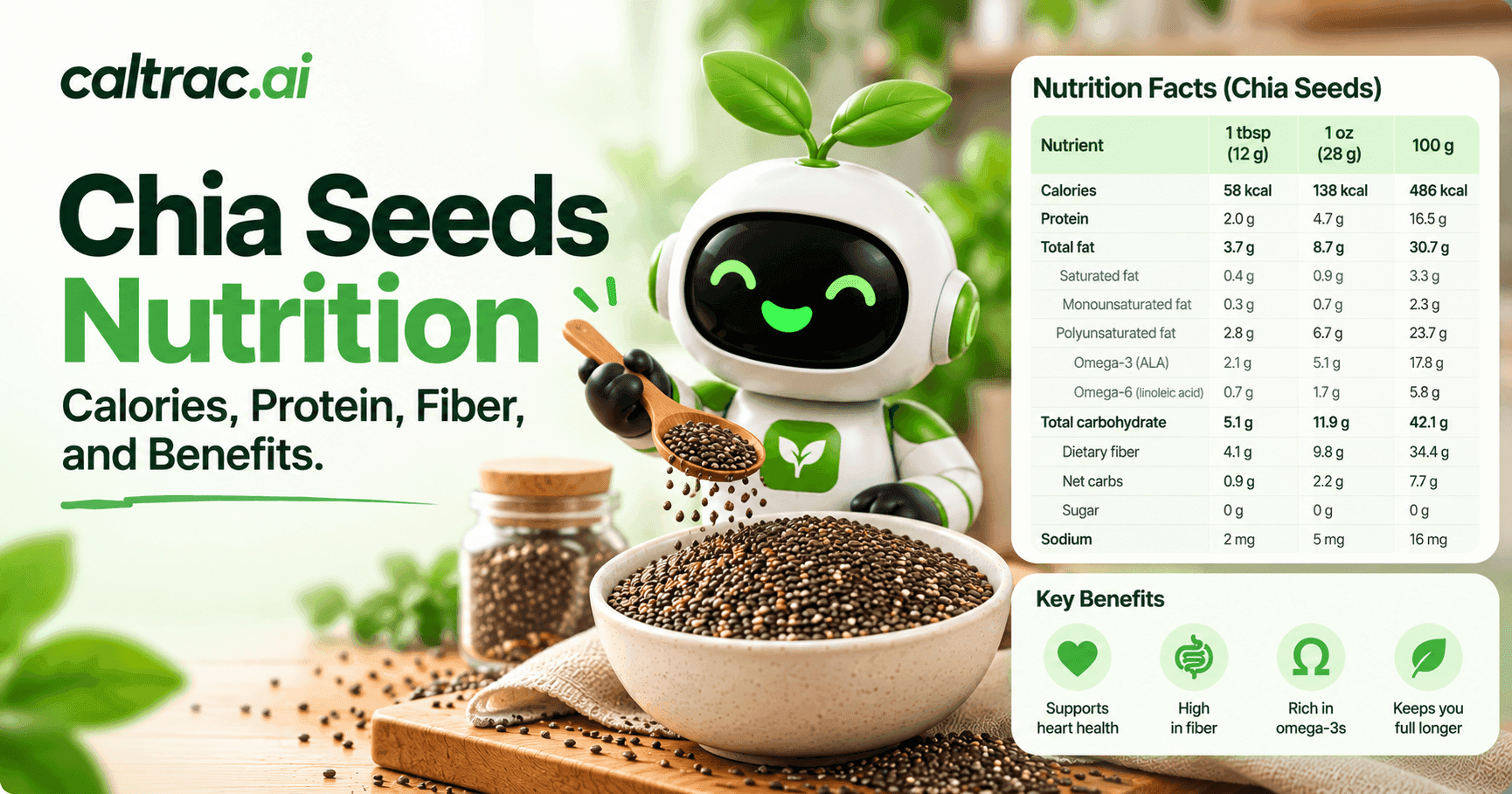
All figures below come from USDA FoodData Central (dried chia seeds, FDC ID 170554). One ounce is 28.35 g; a level tablespoon of dry chia weighs roughly 12 g.
| Nutrient | 1 tbsp (12 g) | 1 oz (28 g) | 100 g |
|---|---|---|---|
| Calories | 58 kcal | 138 kcal | 486 kcal |
| Protein | 2.0 g | 4.7 g | 16.5 g |
| Total fat | 3.7 g | 8.7 g | 30.7 g |
| Saturated fat | 0.4 g | 0.9 g | 3.3 g |
| Monounsaturated fat | 0.3 g | 0.7 g | 2.3 g |
| Polyunsaturated fat | 2.8 g | 6.7 g | 23.7 g |
| Omega-3 (ALA) | 2.1 g | 5.1 g | 17.8 g |
| Omega-6 (linoleic acid) | 0.7 g | 1.7 g | 5.8 g |
| Total carbohydrate | 5.1 g | 11.9 g | 42.1 g |
| Dietary fiber | 4.1 g | 9.8 g | 34.4 g |
| Net carbs | 0.9 g | 2.2 g | 7.7 g |
| Sugar | 0 g | 0 g | 0 g |
| Sodium | 2 mg | 5 mg | 16 mg |
A few things stand out:
- Fiber is the headline. Roughly 82% of the carbohydrate in chia is fiber, which is why net carbs sit near 2 g per ounce. That makes chia one of the few seeds that fits comfortably into keto and low-carb plans.
- Most calories come from fat. About 57% of chia's calories are from fat, and roughly three quarters of that fat is polyunsaturated. The omega-6 to omega-3 ratio is about 1:3, which is unusual for a plant food.
- Zero sugar. Chia contains no measurable sugar, so the sweetness in chia pudding comes entirely from whatever you add.
Vitamins and Minerals in Chia Seeds
Chia is a legitimately mineral-dense food. Per ounce, with percent of the FDA Daily Value for adults:
| Mineral or vitamin | Per 1 oz (28 g) | % Daily Value |
|---|---|---|
| Manganese | 0.77 mg | 34% |
| Copper | 0.26 mg | 29% |
| Selenium | 15.6 mcg | 28% |
| Magnesium | 95 mg | 23% |
| Phosphorus | 244 mg | 20% |
| Niacin (B3) | 2.5 mg | 16% |
| Thiamin (B1) | 0.18 mg | 15% |
| Calcium | 179 mg | 14% |
| Iron | 2.2 mg | 12% |
| Zinc | 1.3 mg | 12% |
| Potassium | 115 mg | 2% |
Ounce for ounce, chia has more calcium than milk. One ounce provides 179 mg of calcium, while a cup of 2% milk provides about 300 mg, so 1.7 oz of chia roughly matches a glass of milk. The catch is absorption: chia's calcium is bound up with fiber and phytates, so you will not absorb all of it. Still, for people who avoid dairy, it is one of the better plant sources.
Chia is low in most vitamins. It has only trace amounts of vitamin C, vitamin A, and vitamin E, and no vitamin D or B12.
7 Health Benefits of Chia Seeds
1. High fiber for digestion and regularity
One ounce covers about a third of the 28 g daily fiber target that most adults fall short of. Most of chia's fiber is soluble and forms a gel when it meets water, which softens stool and adds bulk. Soluble fiber also feeds beneficial gut bacteria, which ferment it into short-chain fatty acids linked to a healthier gut lining.
2. Steadier blood sugar after meals
The same gel-forming fiber slows how fast carbohydrates leave your stomach. In controlled trials from the University of Toronto, adding chia to white bread lowered the post-meal blood sugar rise in a dose-dependent way, and a six-month trial in adults with type 2 diabetes found that chia helped maintain good glycemic control alongside standard treatment. Chia will not fix a high-sugar meal, but it does blunt the spike.
3. A rich plant source of omega-3 fats
Chia is one of the most concentrated plant sources of alpha-linolenic acid (ALA). One ounce supplies about 5 g, well above the 1.1 to 1.6 g per day that health authorities recommend. ALA is linked to lower cardiovascular risk in large population studies. One honest caveat: the body converts only a small fraction of ALA into EPA and DHA, the omega-3s found in fish, so chia complements fatty fish or algae oil rather than replacing them.
4. May support healthy blood pressure
Several small randomized trials have reported modest reductions in blood pressure with daily chia intake, including in adults with hypertension and in people with type 2 diabetes. The effect sizes are small and the studies are short, so treat this as promising rather than proven.
5. Minerals for bone health
Calcium, phosphorus, magnesium, and manganese all contribute to bone mineral density, and chia delivers meaningful amounts of all four in a single ounce. This matters most for people eating little or no dairy.
6. Complete plant protein
Chia provides all nine essential amino acids, which is uncommon for a seed. At 4.7 g of protein per ounce it is not a protein powder, but it does help round out the amino acid profile of plant-based meals, especially when paired with grains or legumes.
7. Antioxidant compounds
Chia seeds contain chlorogenic acid, caffeic acid, quercetin, and kaempferol. These polyphenols protect the seed's delicate fats from going rancid, which is why chia keeps far longer than ground flax. In the body, they are associated with lower oxidative stress, though most of this evidence comes from lab and animal studies rather than human trials.
Are Chia Seeds Good for Weight Loss?
Chia is often sold as a weight-loss food. The research is more measured.
- The case for: The fiber and gel expand in your stomach, which can increase fullness and reduce how much you eat at the next meal. In the six-month Toronto trial mentioned above, overweight adults with type 2 diabetes who ate about 30 g of chia per day lost about 1.9 kg more than the control group.
- The case against: An earlier 12-week trial that simply added 50 g of chia per day to people's usual diets found no change in body weight or body fat. Extra calories are still extra calories.
The practical takeaway is that chia can help with appetite control when it replaces something, not when it is sprinkled on top of everything. Two tablespoons add about 117 calories. That is fine if it is your fiber source for the morning. It adds up quickly if it is going into a smoothie that already has nut butter, oats, and banana.
That is where tracking earns its keep. Snap a photo of your chia pudding or type "2 tbsp chia seeds" and track it automatically with Caltrac. You will see the calories, fiber, and omega-3s logged in seconds, and your Apple Health-powered net calorie count will show exactly how it fits your day. Enjoy the superfood; let the app watch the numbers.
How Much Chia Should You Eat Per Day?
Most studies showing benefits used 25 to 40 g per day, which is roughly 2 to 3 tablespoons. For everyday use, 1 to 2 tablespoons (12 to 24 g) daily is a sensible target that delivers 4 to 8 g of fiber without overloading your gut.
Two rules make chia easier to live with:
- Start small. If you are not used to much fiber, begin with 1 teaspoon and build up over a week or two to avoid bloating and gas.
- Drink water. Chia absorbs around 10 to 12 times its weight in liquid. Eating it dry and then drinking very little can leave you constipated, which is the opposite of the goal.
Easy Ways to Eat Chia Seeds
- Chia pudding: 3 tbsp chia + 1 cup milk of choice, stirred and refrigerated for at least 2 hours.
- Overnight oats: 1 tbsp stirred into oats and milk the night before.
- Smoothies: 1 tbsp blended in; it thickens the texture noticeably.
- Egg substitute: 1 tbsp chia + 3 tbsp water, rested 5 minutes, replaces one egg in baking.
- Jam thickener: Stir 1 to 2 tbsp into mashed berries instead of pectin.
- Sprinkled on: Yogurt, salads, avocado toast, or oatmeal.
- Chia water: 1 tbsp in a glass of water with lemon, left to gel for 10 minutes.
Unlike flaxseed, chia does not need to be ground. Its outer shell is soft enough that whole seeds are digested and the fats absorbed, although ground chia may raise blood ALA levels slightly more.
Chia Seeds vs. Flaxseeds
Both are omega-3 seeds, and they are close in nutrition. Here is how one ounce compares, using USDA data for both:
| Per 1 oz (28 g) | Chia seeds | Flaxseeds |
|---|---|---|
| Calories | 138 | 151 |
| Protein | 4.7 g | 5.2 g |
| Fat | 8.7 g | 12.0 g |
| Omega-3 (ALA) | 5.1 g | 6.5 g |
| Carbs | 11.9 g | 8.2 g |
| Fiber | 9.8 g | 7.7 g |
| Calcium | 179 mg | 72 mg |
| Magnesium | 95 mg | 111 mg |
Flax has a little more ALA and protein; chia has more fiber, far more calcium, and fewer calories. Flax must be ground to be absorbed and goes rancid quickly once ground, while chia can be eaten whole and stores for months. There is no wrong choice. Many people alternate.
Side Effects and Precautions
Chia is safe for most people, with a few things worth knowing:
- Digestive upset: Too much, too fast can cause bloating, gas, or constipation. Increase gradually and drink enough water.
- Choking risk: Never swallow a spoonful of dry chia followed by water. The seeds can swell in the esophagus. A published case report describes exactly this. Always let chia gel in liquid first, or mix it into food.
- Blood thinners and blood pressure medication: Because of its omega-3 content and possible blood-pressure effects, people on anticoagulants or antihypertensives should check with their doctor before eating large daily amounts.
- Allergy: Chia allergy is rare, but people with sesame or mustard seed allergies have reported cross-reactions.
- Calorie density: At 486 calories per 100 g, chia is energy-dense. The health benefits do not cancel out the calories.
Frequently Asked Questions
How many calories are in 1 tablespoon of chia seeds? About 58 calories per level tablespoon (12 g), with 4 g of fiber and 2 g of protein.
How many calories are in 2 tablespoons of chia seeds? About 117 calories, 8 g of fiber, 4 g of protein, and 4 g of omega-3 ALA. This is the most common serving size.
Are chia seeds keto-friendly? Yes. One ounce has about 12 g of total carbs but nearly 10 g of that is fiber, leaving around 2 g of net carbs.
Do I need to soak chia seeds? Not for digestion or absorption, but soaking makes them easier to eat, eliminates the choking risk, and gives you the pudding texture. Soaked or dry, the calories are identical.
Is chia a complete protein? Yes. Chia contains all nine essential amino acids, though in modest amounts, so it works best alongside other protein sources.
Can I eat chia seeds every day? Yes. One to two tablespoons daily is well within the amounts used safely in clinical trials.
Nutrition data in this article is sourced from USDA FoodData Central. Percent Daily Values are based on FDA reference values for adults on a 2,000-calorie diet.