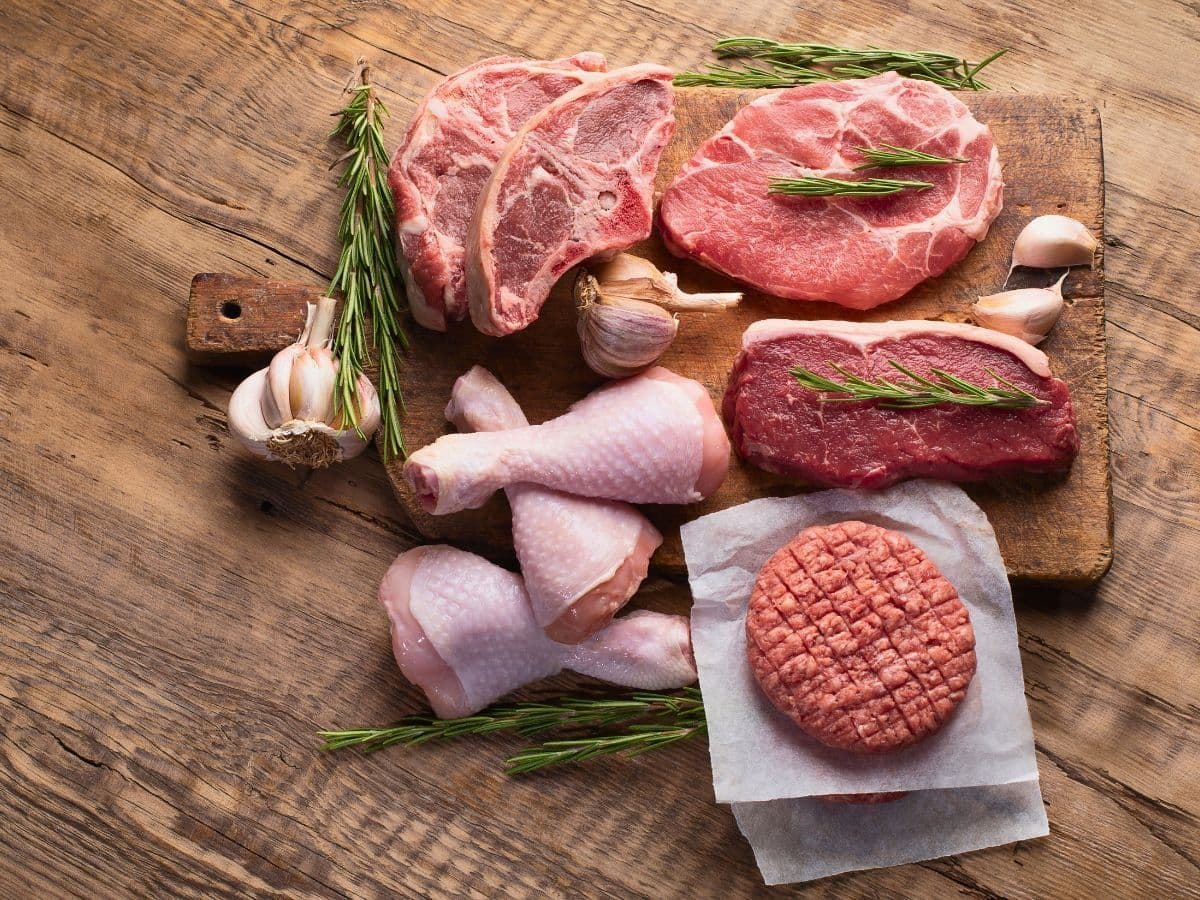
Chicken vs beef for weight loss isn't a clean win for either side — the real answer depends on the cut you choose and the portion you eat. A skinless chicken breast and a fatty beef burger are worlds apart, and so are a lean sirloin and a skin-on chicken thigh. The short verdict: the leanest cut, in a sensible portion, that keeps your total daily calories in check is the winner — and both chicken and beef can absolutely fit into a calorie deficit.
Chicken vs beef: nutrition at a glance
Here's how the common options stack up per 100g cooked. These are approximate round numbers — real values shift with the exact cut, trimming, and cooking method.
| Cut (per 100g cooked) | Calories | Protein | Total fat | Saturated fat |
|---|---|---|---|---|
| Chicken breast (skinless) | ~165 | ~31 g | ~3.5 g | ~1 g |
| Chicken thigh (skinless) | ~210 | ~26 g | ~11 g | ~3 g |
| Lean beef (90/10) | ~175 | ~26 g | ~8 g | ~3 g |
| Regular beef (80/20) | ~255 | ~25 g | ~17 g | ~6.5 g |
A few things jump out: chicken breast is the lowest-calorie, highest-protein option, while 80/20 beef carries the most calories and saturated fat. But notice that lean beef and chicken thigh land in roughly the same ballpark — the gap between "chicken" and "beef" is smaller than the gap between cuts.
Source: figures are rounded averages based on USDA FoodData Central.
Calories and protein: what matters for a deficit
Weight loss comes down to a sustained calorie deficit — eating fewer calories than you burn. Within that deficit, protein is the macronutrient that does the heavy lifting, and both chicken and beef are excellent sources.
Protein helps in two big ways:
- Satiety. Protein is the most filling macronutrient, so high-protein meals tend to keep you fuller for longer and make it easier to hit your calorie target without constant hunger.
- Muscle retention. In a deficit, adequate protein helps preserve lean muscle so more of the weight you lose comes from fat — which keeps your strength and metabolism up.
Per 100g, chicken breast edges out beef on protein-per-calorie, which is why it's a deficit favorite. But a lean cut of beef delivers very similar protein with only modestly more calories. The choice is about preference, not a make-or-break difference.
Not sure what your own numbers should be? Start with your calorie target, then use it to set a daily protein goal — that's what makes either choice work.
Fat content and cuts
Here's the part most people miss: the cut matters far more than the animal. Fat is calorie-dense at about 9 calories per gram, so the fattier the cut, the higher the calorie count for the same weight.
- Chicken breast is naturally lean. Leave the skin off and it's hard to beat for calories per gram of protein.
- Chicken thigh is tastier to many people but carries more fat — still a great option, just count it accordingly.
- Lean beef (90/10, or cuts like sirloin and eye of round) can be just as deficit-friendly as chicken thigh.
- Regular beef (80/20), ribeye, and most processed cuts pack the most fat and calories.
The practical takeaway: a lean beef cut can easily beat a fattier chicken cut for weight loss. Don't assume "chicken = healthy, beef = fattening." Read the cut, trim visible fat, and watch your cooking oils — frying or heavy sauces can add more calories than the meat itself.
Micronutrients
Calories and protein drive weight loss, but nutrient quality matters for how you feel while dieting. This is where beef has a genuine edge.
Beef is richer in:
- Iron — especially well-absorbed heme iron, helpful for energy and avoiding fatigue, particularly for menstruating women.
- Vitamin B12 — important for energy and nerve function.
- Zinc — supports immune function and recovery.
Chicken still provides quality protein along with B vitamins (like niacin and B6), selenium, and phosphorus — it's just lighter on iron and zinc than red meat.
If you eat very little red meat, it's worth paying closer attention to iron and B12 from other foods. If you eat red meat regularly, lean beef is a convenient way to cover those bases.
So which is better for weight loss?
Here's the honest verdict: there's no single winner — the leanest cut, in a controlled portion, that fits your daily calorie target wins.
- For pure calories-per-gram-of-protein, skinless chicken breast is the champion.
- For iron, B12, and zinc alongside solid protein, lean beef is excellent.
- For flavor and variety, rotating both keeps your diet sustainable — and sustainability is what actually drives long-term fat loss.
What sabotages people isn't choosing beef over chicken; it's oversized portions, fatty cuts, and calorie-heavy cooking. Nail those three and either meat works.
How to fit either into your day
The simplest approach: pick the cut you enjoy, weigh your portion, and make sure it fits your daily calorie and protein goals. A practical template:
- Aim for a palm- to two-palm-sized portion of cooked meat per meal.
- Default to leaner cuts most of the time, and enjoy fattier ones in smaller portions.
- Use low-calorie cooking — grill, bake, air-fry, or pan-sear with minimal oil.
- Pair with vegetables and a smart carb to round out the meal.
The easiest way to stay on track is to log it. Instead of guessing, you can track it automatically with Caltrac — snap or describe your meal and get instant calories and macros, so you'll see exactly how that chicken breast or sirloin fits your deficit.
FAQ
Is chicken or beef better for fat loss? Neither is automatically better. Skinless chicken breast has the best protein-per-calorie ratio, but lean beef is very close and adds more iron and B12. The leanest cut in a portion that fits your calorie target wins.
Can I eat red meat while losing weight? Yes. Lean beef cuts fit comfortably into a calorie deficit and provide protein, iron, and B12. Favor leaner cuts, watch portion size, and keep total daily calories in check.
Does chicken have fewer calories than beef? Often, but not always. Chicken breast is lower in calories than most beef, but lean beef can have fewer calories than skin-on chicken thigh. The cut matters more than the animal.
How much chicken or beef should I eat to lose weight? There's no fixed amount — it depends on your overall calorie and protein targets. A common starting point is a palm- to two-palm-sized portion per meal, adjusted so your daily totals land in a deficit.